God Renews His Promise to Abram, Genesis 15:2-7

After God promises Abram that He will be his shield and very great reward (Gen. 15:1), Abram voices his concern:

O Sovereign LORD, what can you give me since I remain childless and the one who will inherit my estate is Eliezer of Damascus? . . . .You have given me no children; so a servant in my household will be my heir,” (Gen. 15:2-3).

You may read Genesis 15:1-7 here: Bible Gateway.

The custom in that day held that if Abram died without a son, his oldest servant would become his heir. Even though Abram valued Eliezer, his chief administrator (Gen. 24), he yearned for a son to carry on the family line. And his nephew, Lot—with no record of appreciation for Abram saving his life—had returned to Sodom.

God’s promise of many descendants didn’t align with Abram’s present reality.

But our God—being the God of the impossible—reminded Abram that his son would come from his own body.

Once again, God confirms His promise to Abram (12:2; 13:15-16).

“Before, God said Abram’s seed would be as the dust of the earth. Now, He says they will be as the stars of heaven. Not only does this imply a great number, but perhaps also that the sphere of activity of the promised seed in the eternal ages will be both on earth and in heaven.” – Henry Morris

God Credits Abram with Righteousness

Abram’s response in Genesis 15:6 is considered by some to be the most important verse in the Old Testament: “Abram believed the LORD, and He credited [or imputed] it to him as righteousness.”

For the first time, the principle of true salvation is set forth in the Bible. The New Testament not only confirms salvation by faith, but also sets Abraham as a type of all who would be saved (Rom. 4:3; Gal. 3:6; James 2:23).

God declared Abram clean and morally right—righteous—not from his outward actions of obedience and/or works, (although these are by-products of faith), but rather on the basis of his faith.

In Noah’s case, ‘grace’ comes before ‘righteousness’; in Abram’s case, ‘faith’ comes before ‘righteousness.’ The one stresses God’s sovereignty, the other man’s responsibility. Both are true and necessary. ‘By grace are ye saved through faith. . . . For we are His workmanship, created in Christ Jesus unto good works” (Eph. 2:8, 10).  – Henry Morris, The Genesis Record

Reflect

  • There are many times when we can’t see God’s big picture for our lives, but He is constantly working to accomplish His purposes. “In all things He works for the good of those who love Him (Rom. 8:28).”
  • God has always yearned for His people to trust Him: to believe He is who He says He is and does what He says He will do.
  • Today, we live under God’s new covenant: God graciously provides forgiveness of our sins and gives salvation (unto righteousness) through faith in His Son, Jesus Christ, because of His atoning sacrifice on the cross.
  • Have you taken this step of faith? (For more on salvation and righteousness see: Peace Through Christ.)
The Word of the Lord, Genesis 15:1

After this, the word of the LORD came to Abram in a vision: ‘Do not be afraid, Abram. I am your shield, your very great reward.’ – Genesis 15:1

Because there are so many great insights in chapter 15, I am breaking this chapter into four sections/posts.

It’s easy to gloss over Genesis 15:1. But a deeper inspection reveals many great firsts in Scripture. This is the first time the words “vision”, “shield”, and “reward” are used. More importantly, this is the first of the great “I am’s” mentioned. God’s very name is: “I am that I am” (Exodus 3:14). Christ began many of His words with “I am”:

  • the light of the world
  • the way, truth and life
  • the door
  • the Alpha and Omega
  • the root and offspring of David, and the bright and morning star

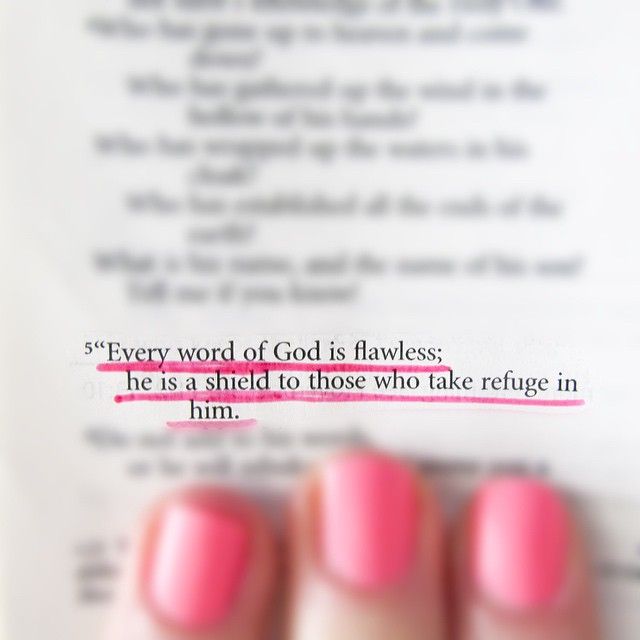
    Proverbs 30:5

    Proverbs 30:5

This is also the first time “word” is used. It is significant that this first occurrence of “word” conveys God’s message to man—not man’s message—and communicates a huge claim and promise to Abram.

God considers His word so important that He values it over His name (Psalm 138:2).

Henry Morris (The Genesis Record) writes: “The concept of the Word of God includes both the written Word, Holy Scripture, and the living Word, God the Second Person [Jesus]. . . . He is the sum of all that can be communicated. [His title] “Alpha and Omega” are, of course, the first and last letters of the Greek alphabet, the language chosen by God in which to inscripturate His new covenant with man. This proclamation seals the oneness of the written and living Words.”

***

Do not be afraid, Abram. I am your shield, your very great reward.”

God had just given Abram victory over the eastern kings. So why was he afraid? Like everyone else, Abram fought fear. Maybe he was exhausted and feared the wrath of the kings he just defeated. Or—as verse two implies—maybe he feared that his servant, Eliezer, would inherit his estate since he was childless.

Whatever the root of Abram’s anxiety, God knew, just as He knows our fears.

I love how God encouraged and comforted Abram with a familiar hands-on tool. The Old Testament warrior’s primary defensive weapon was the shield. This mobile fort protected the soldier’s flesh from the enemy’s blade.

Not only would God be Abram’s great reward, He would also be his defender.

So What?

When fear knocks on our doors, remember: God is the great “I am”. Not only is He near, but He is also bigger than the sum of all our fears.

I like Morris’ commentary: “For the believer, Christ is both protection from all harm and provision of all needs. He provides our ‘shield of faith’ (Eph. 6:16)—indeed the “whole armor of God,” so that we can be strong in the Lord, and in the power of His might (Eph. 6:10-11). He is also our ‘exceeding great [literally abundant] reward. . . . He is able to do exceeding abundantly above all that we ask or think, according to the power that works in us’ (Eph. 3:20).”

Abram Rescues Lot, Genesis 14

Bleak, costly, and consuming, from ancient times to the present its ugly head still strikes:

War.

The first war recorded in Scripture—between five southern kings and four eastern kings—is found in Genesis 14:1-14.

You may read Genesis 14 here: Bible Gateway.

Verses 1-14 not only serve as an introduction, but also relay the political and geographical climate of this large territory in Abram’s day. This area stretches north and west of the Sea of Galilee, and winds south through the Jordan Valley to the Red Sea. This prime land bridge between Egypt and Mesopotamia would seal a monopoly on international trade for the king in control.

NortheasternInvasionShinar, (Babylon, modern day Iraq) launches this war after being subdued for 12 years—along with the other southern kings—to Kedorlaomer. Thinking that the tar pits in the valley of Siddim will be a natural defense, Sodom and Gomorrah kings, along with their southern allies, prepare for battle. But instead, they meet defeat.

LOT CAPTURED

Lot and his family—who separated from Abram and moved to prosperous Sodom—find themselves trapped in a nightmare as they are taken captive by the eastern kings.

Although Abram could have left Lot and his family to the consequences of their new move, he didn’t.

Abram and 318 of his trained men march a great distance—240 miles one way—in pursuit of the enemy.  Their tough trek begins in the hill country south of Jerusalem to Dan, (the most northern region that came to be called Israel).

As the enemy revels in their victory at night, Abram divides his men and launches a counter attack. They successfully rescue Lot’s family and all his possessions.

Victory Credits

Abram’s victory stemmed from his desire to save his nephew, but the cities of Sodom and Gomorrah also benefited. Sodom’s king confers a reward upon Abram for being a conquering hero. But Abram denies the gifts. Before all the people he tells the king of his oath to God. He would take nothing—except for his men’s rewarded share—so that the king couldn’t say: “I have made you rich.”

Melchizedek’s Blessing

Melchizedek, “king of Salem and priest of God Most High” (vs. 18), tributes Abram’s success to God as he blesses Abram. In response, Abram recognizes his priestly role and gives him a tithe.

Who is Melchizedek?

The NIV Life Application Study Bible notes: “Melchizedek means ‘king of righteousness,’ and king of Salem means ‘king of peace.’ He was a ‘priest of God Most High’ (Hebrews 7:1-2) who recognized God as Creator of heaven and earth.”

Four main theories have been suggested about Melchizedek:

  1. He was a respected king of that region. Abram was simply showing him the respect he deserved.
  2. The name Melchizedek may have been a standing title for all the kings of Salem.
  3. Melchizedek was a type of Christ [illustrating a lesson about Christ] (Hebrews 7:3).
  4. Melchizedek was the appearance on earth of the pre-incarnate Christ in temporary bodily form.

Reflect

  • Prosperity can be enticing. But like Lot, we can easily become enslaved if our aims don’t line up with God’s agenda.
  • What trial(s) are you going through? The trouble we face today is training us to be stronger for the more difficult tasks of tomorrow.
  • Like Abram, we should: Prepare for difficult tasks; seek courage from God; and be willing to act immediately when others need our help.

Does Archaeology Support the Bible?

Over and over again the Bible has been vindicated from Genesis to Revelation. The superiority of Genesis 1–11 has been established, and the patriarchal backgrounds have been endorsed.”  – Clifford Wilson

Before moving on to The Abrahamic Covenant, Genesis 14-17, I thought it would be interesting to investigate archaeology discoveries that confirm the account of Genesis. Although I believe the Bible is God’s revealed Word and that God doesn’t need further proof of His truth, archaeology is a great tool for understanding Bible history and growing one’s confidence in the accuracy of biblical accounts.

Henry Morris in The Genesis Record writes: “It is significant that these excavations do not show primitive, half-bestial cultures, newly evolved from an animal ancestry, but high civilization, exactly as suggested in Genesis. . . . Not only did the ‘intelligentsia’ of Ur know how to read and write long before the time of Abraham, but so did even the ordinary citizens. When Abraham lived there, Ur had already begun to decline somewhat from a former glory.”

Although the exact chronology of Genesis 11 is uncertain, there is ample archaeological evidence that suggests the names and events in Genesis are not just legendary Jewish heroes and places, but were real people and places.

Clifford Wilson in “Does Archaeology Support the Bible?” writes: “Archaeologists are scholars, usually academics with interest in the Bible as an occasional source book. A substantial number of scholarly archaeologists are committed Christians, but they are a minority. Many people believe that all archaeologists set out to verify biblical history, but that is not the case. Many excavators have virtually no interest in the Bible, but there are notable exceptions.”

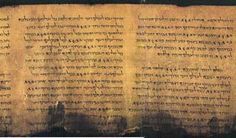
Dead Sea Scrolls

Dead Sea Scrolls

“Where confirmation is possible and has come to light, the Bible survives careful investigation in ways that are unique in all literature. Its superiority to attack, its capacity to withstand criticism, and its amazing facility to be proved right are all staggering by any standards of scholarship. Seemingly assured results ‘disproving’ the Bible have a habit of backfiring.”

“The more this new science of archaeology touches the records of the Bible, the more we are convinced that it is a unique record. At many points it is greatly superior to other writings left by neighboring people.”

Clifford Wilson’s article may be found at this link: Does Archaeology Support the Bible? It’s long, but an interesting read. Wilson delves into three major evidences for each of the following biblical accounts:

  • Genesis 1–11, 11-36, 37-50
  • Exodus to Deuteronomy
  • Joshua to Saul
  • David to Solomon
  • the Assyrian Period
  • the Babylonians and Nebuchadnezzar
  • Cyrus and the Medes and Persians
  • Ezra and Nehemiah
  • the Dead Sea Scrolls
  • the Person of Our Lord Jesus
  • the New Testament, the Early Church, and the Early Years of Christianity

***

I hope you are enjoying the end of summer. It rained most of today, which is a refreshing change. Have a wonderful weekend! 🙂

Abram’s Third Revelation, Genesis 13:14-18

Lift up your eyes from where you are and look north and south, east and west. All the land that you see I will give to you and your offspring forever. I will make your offspring like the dust of the earth, so that if anyone could count the dust, then your offspring could be counted. Go, walk through the length and breadth of the land, for I am giving it to you.” – Genesis 13:14-17

This is the second part from last week’s post, Abram and Lot Separate.

*****

The idea of walking through the land (vs. 17) appears to be symbolic. Armies in the ancient Near East declared their victory by marching through a defeated territory.

Layman’s Bible Commentary makes three observations about God’s third revelation to Abram:

  1. God will give the land to Abram and his descendants forever.
  2. Abram’s heir will be his own child.
  3. Abram’s descendants will be innumerable.

These promises were great news for Abram, especially 3a6bfc15a12e519590af3c1b7018482eas Lot parted east toward the more fertile plain of Jordan and Abram headed back into the hill country of Canaan. The reality of God’s promises, however, would not come into fruition for a long time.

For neither Abram, nor his descendants (especially the promised seed Isaac) owned the land for most of history. And although Israel regained possession as a nation in 1948, they currently possess only a fraction of the land God has promised.

The Land of Canaan

Of the promise of the land, Henry Morris in The Genesis Record notes: “This promise must either be taken in the spiritual sense (applying it to a spiritual land of promise, as so interpreted by many expositors) or else ascribed to a time yet future. Since God promised the land to Abram and his seed forever, this can ultimately, if taken literally be fulfilled only in the new earth of Revelation 21. It will quite probably be fulfilled precursively, however, during the coming millennial age.”

Innumerable Descendants

Along with the Jews, Abram’s descendants include the Arabs. Although these two groups add up to a large number, the literal promise of Abram’s seed numbering “as the dust of the earth” and Abram becoming a great nation still awaits fulfillment.

Morris observes: “The New Testament makes it clear that ‘Abram’s seed’ was Christ Himself (Gal. 3:16), and that Abram is ‘father of all them that believe’ (Rom. 4:11), so that he also has a spiritual seed. It is evidently not a case of either this or that, but of both! The Jewish nation is to be eternally blessed as a nation, chosen of God in Abram. Likewise, the Christian Church, genuine believers in Christ from all nations, is itself a ‘holy nation’ (1 Peter 2:9), ‘Abraham’s seed, and heirs according to the promise’ (Galatians 3:29). Abram indeed was to be the ‘father of many nations’ (Gen. 17:5).”

Chapter 13 ends with Abram building another altar where he makes his home base in Hebron (18:1), which means “communion.” This is also where he is later buried (25:9).