Consecration of the Priests (Part 1), Exodus 29:1-37; 30:22-33

“It comes as a shock to some people to learn that Jesus did not die to make us happy; He died to make sinners holy. ‘Be holy, for I am holy’ was a frequent command to the Jews and it’s repeated in 1 Peter 1:15-16 for believers today. . . .” – Warren Wiersbe, Be Delivered

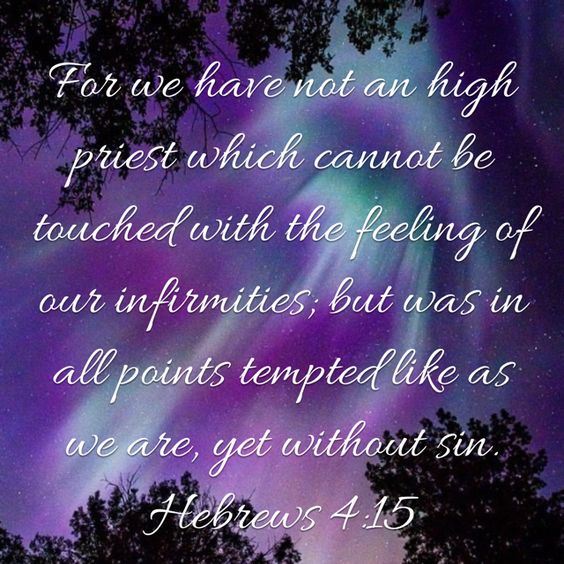
My last post explored the purpose of the priesthood and the High Priest. We learned that the priesthood with the sacrificial system was temporary. Through the priests and their work, God planned to prepare all people for the coming of His Son, Jesus Christ, God in flesh. Jesus, our great high priest, is superior to the Old Testament priests. Like the high priest, He mediates between God and us. But unlike the high priest who could only go before God once yearly, Christ is always available to hear our prayers and intercedes for us as our representative at the Father’s right hand. As a human, Jesus experienced a full range of temptations, but never sinned. He sympathizes with us in our weakness and assures us of God’s forgiveness and help when facing temptation.

It would be easy to gloss over this next section, “Consecration of the Priests”. But through a consistent study of the Old Testament, we’re given a deeper understanding and appreciation of the New Testament. When I read Wiersbe’s quote (below) I wonder if this truth gets muted in some of our churches where the main focus is on entertainment.

Jesus did not die to make us happy; He died to make sinners holy.”

This certainly isn’t a popular teaching. Many probably question: “Why would I want to follow God if He’s not for my happiness?” The truth is, however, God is for our joy and happiness. But being perfectly holy, He hates sin. Yes, He also loves the sinner, thankfully! But if we’re not cleansed from our sin, we won’t be living with Him for eternity (Rom. 6:23). God also knows that deep joy can only be ours when we are free from being entangled in sin. So He disciplines those He loves.
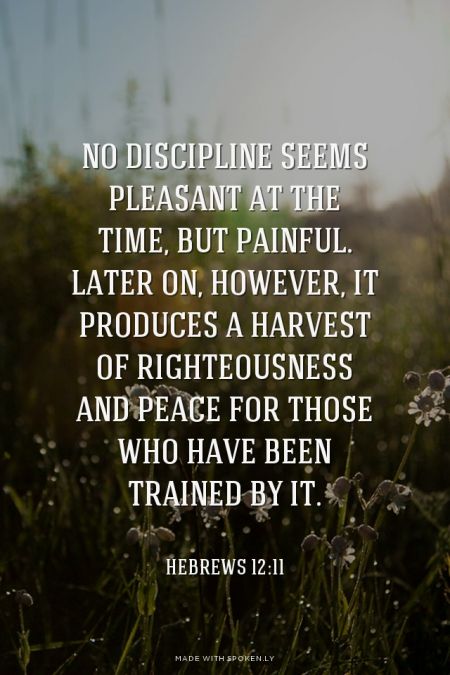
Joy is a by-product of living in God’s presence and is not dependent on our circumstances.

It would be wrong if I don’t finish Wiersbe’s quote before moving on: “The first step toward happiness is holiness. If we’re right with God, then we can start being right with others and with the circumstances of life that trouble us. If you aim for happiness, you’ll miss it, but if you aim for holiness, you’ll also find happiness in the Lord.”

Consecration of the Priests

To set the high priest and his sons apart as God’s servants, God commanded that they participate in a public consecration service. Wiersbe writes of at least seven stages in this service.

  • The priests were washed (Ex. 29:4; Lev. 8:6). The Bible depicts sin with the following terms: disease (Isa. 1:4-6), darkness (1 John 1:5-10), drowning (Ps. 130:1-4), and even death (Eph. 2:1, 5; John 5:24), but frequently it’s pictured as dirt and defilement (Isa. 1:16, 18; Jer. 4:14; 2 Cor. 7:1; Heb. 9:14; James 1:21; 4:8). Complete cleansing from the Lord was symbolized when Aaron and his sons were washed all over. Likewise, those who have placed their trust in Christ have also experienced this inward cleansing from the Lord (1 Cor. 6:9-11).
  • The priests were clothed (Ex. 29:5-6, 8-9, 29-30; Lev. 8:7-9, 13). God instructed the priests to wear specific garments. Moses clothed his brother Aaron and his sons with linen tunics and bonnets. They dared not minister in the tabernacle without their official “uniforms”. Scripture likens the wearing of garments to the character and life of the believer. We are to put aside filthy garments of the old life and put on the beautiful “garments of grace” the Lord provides (Eph. 4:17-32; Col. 3:1-15). When Christ died on the cross He purchased a robe of righteousness for us (Isa. 61:10; 2 Cor. 5:17, 21).

I’ll conclude with the remaining stages of this consecration service in my next post.

Reflect

It’s always easier (and more comfortable) to point out sin in others. But God tells us “all our righteous acts are like filthy rags; we all shrivel up like a leaf, and like the wind our sins sweep us away” (Isaiah 64:6). We can never achieve righteousness by our own efforts and standards. However, when we ask God with honesty and sincerity to save us from our sins, He will do it (1 John 1:9). For “God made him who had no sin to be sin for us, so that in him we might become the righteousness of God, (2 Cor. 5:21).  Although Jesus followed His Father’s call, He willingly laid down His life. Why? “For the joy set before him he endured the cross, scorning its shame, and sat down at the right hand of the throne of God” (Hebrews 12:2). Christ went all out so we could be clothed in a robe of righteousness and have eternal life.

What an awesome privilege to live in a time when Jesus Christ reigns not only as King over sin and death, but also serves as our Mediator and High Priest! God’s mercy toward us is not to be taken lightly. Philippians 2:12 tells us to “continue to work out your salvation with fear and trembling”. In context, this verse is an exhortation to unity, but I think it also refers to being careful in how we live and what we believe. . . . Have a great week!
The Purpose of the Priesthood and High Priest

Last week we explored the significance of the priestly garments in Exodus 28. We not only discovered that their clothing symbolized God’s expectations for them, but there are also some truths that parallel today’s church ministry of “the holy priesthood”.

Although God originally intended for His chosen people to be a “kingdom of priests” (Ex. 19:6)—both as a nation and individually dealing directly with God—the people’s sin blotched that idea. So God initiated plan B by appointing priests from Levi’s tribe with the intended purpose of the people being able to approach Him within His system of sacrifices. If the people would offer certain sacrifices administered by the priests on their behalf, God promised to forgive their sins. The priests were also to represent God to the people by helping them obey the law through their teaching (Lev. 10:8-11; Deut. 33:10; Mal. 2:7).

The High Priest

The high priest was the highest religious leader of the Israelites. This position was hereditary, traced from Aaron’s lineage (Moses’ brother) who belonged to the Levite tribe (Exodus 28:1Numbers 18:7). Requirements of the high priest included: to be “whole” physically (without any physical defects) and holy in his conduct (Leviticus 21:6-8).

One role of the high priest was to oversee the responsibilities of all the subordinate priests (2 Chronicles 19:11). Only certain tasks were given to him, such as wearing the Urim and the Thummin (engraved dice-like stones used to determine truth or falsity), even though he could also perform regular priestly roles. The Israelites went to the high priest when seeking God’s will (Numbers 27:21). The New Testament (John 11:49-52) references the high priest as also having the gift of prophecy.

Another role of the high priest includes making a sin offering not only for himself, but also for the sins of the whole congregation (Leviticus 4:3-21). When a high priest died, all those confined to the cities of refuge for the accidental cause of death to another were given freedom (Numbers 35:28).

On the tenth day of the seventh month of every year the high priest conducted the service on the Day of Atonement. This marked his most important duty. For he was the only one permitted to enter the Most Holy Place to stand before God. Having made a sacrifice for himself (so he wouldn’t die) and for the people, he then brought the blood into the Holy of Holies. Through sprinkling the blood on the mercy seat, God’s “throne” (Leviticus 16:14-15) he made atonement for himself and the people for all their sins during that year (Exodus 30:10). This service is compared to the ministry of Jesus Christ as our High Priest (Hebrews 9:1-28).

(King James Version, source: Bible.Com)

Reflect

The priesthood with the sacrificial system was temporary. The New Testament book of Hebrews tells us that Christianity surpasses Judaism because it has a better covenant (8:1-13), a better sanctuary (9:1-10), and a more sufficient sacrifice for sins (9:11-10:18).

The NIV Life Application Study Bible notes: “Through these priests and their work, God wished to prepare all people for the coming of Jesus Christ, who would once again offer a direct relationship with God for anyone who would come to Him. But until Christ came, the priests were the people’s representatives before God. Through this Old Testament system, we can better understand the significance of what Christ did for us (see Hebrews 10:1-14).”

Christ is completely competent, qualified and supreme in the forgiveness of our sins. Not only is He the perfect revelation of God, but He is also the final and total sacrifice for our sin. Thankfully, Jesus—the only way to eternal life—is also our compassionate and understanding mediator.

The Priestly Garments, Exodus 28

I hope you are enjoying this last day of summer! We are drawing closer to the end of Exodus, (exhale). I am certainly learning a lot as I plod through this Old Testament book. It’s time to examine “the holy priesthood” that God ordained for the tabernacle.

God desired for Israel to be “a kingdom of priests” (Ex. 19:6) to share His blessings and reveal His glory to the surrounding unbelieving nations. But to glorify the Holy God, Israel would need to be a holy people. So God called the Aaronic priesthood (Aaron’s family) and the Levites (Num. 3-4) to serve and represent the people before Him in the tabernacle. They were also to represent God to the people by helping them obey the law through their teaching (Lev. 10:8-11; Deut. 33:10; Mal. 2:7). God didn’t choose Aaron and the Levites because of any special merit on their part, but rather as an act of sovereign grace.

Israel, however, failed in their role as a kingdom of priests. Instead of helping the people worship God, the spiritual leadership slowly decayed to the point of allowing idol worship in God’s temple (Ezek. 8). So God disciplined His people by permitting the Babylonians to carry thousands of Jews into exile. The Babylonians not only destroyed Jerusalem, but also the temple. Why? “But it happened because of the sins of her prophets and the iniquities of her priests who shed within her the blood of the righteous” (Lam. 4:13).

How does the Old Testament priesthood relate to us today? Warren Wiersbe (Be Delivered) writes: “Today, God wants His church to minister in this world as a “holy priesthood” and a “royal priesthood” (1 Peter 2:5, 9). If God’s people are faithful in their priestly ministry, they will “proclaim the praises of Him who called [them] out of darkness into His marvelous light” (1 Peter 2:5, 9 NKJV).

Like Aaron and his sons, we didn’t choose God. Rather, “[He] chose us” (John 15:16) as an act of divine grace. It’s no small thing that the Almighty God saves sinners, makes us His children, and then equips us to be His “holy priesthood”. Our first priority is to please God and serve Him. If we accomplish this, then He will work in us and through us to achieve His work in this world.

As we study the Old Testament priesthood, let’s look for parallels between the past work of the Jewish priests and the church’s ministry today of “the holy priesthood”.

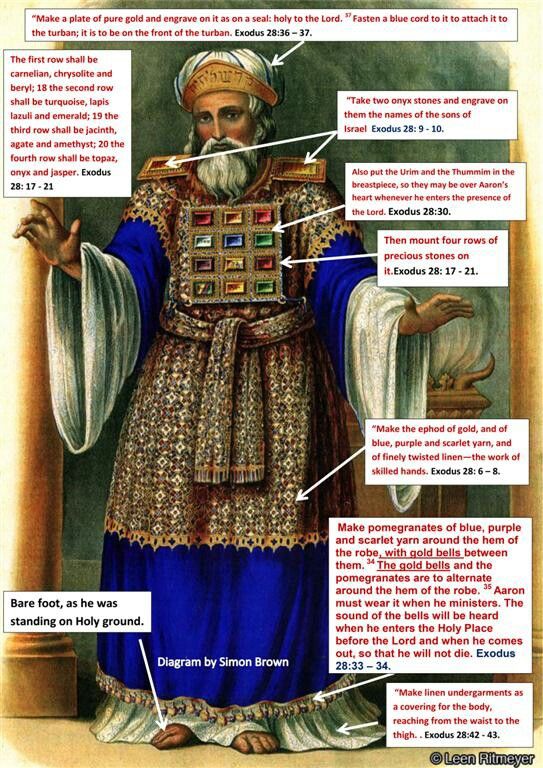
The priestly garments

7bd75c111d10960561a96ea2000ff657

One way the priests were to please the Lord was to obediently dress in His designed garments for them. They couldn’t dress however they wanted when ministering in the tabernacle. Why? Wiersbe lists three reasons: 1) They gave the priests “dignity and honor (Ex. 28:2) and set them apart, just as a uniform identifies a soldier or a nurse; 2) they revealed spiritual truths relating to their ministry and our ministry today; and 3) if the priests didn’t wear the special garments, they might die (vv. 35, 43).

And now—although I love having you here at my site—let’s examine GotQuestions.Org’s summary of this topic: the significance of the priestly garments. Listed below their post are related topics including: What were the Urim and Thummim?What was the significance of the ephod?, and What was the significance of the anointed priest?  Have a terrific week, end of summer, and beginning of fall! 🙂

God Wants His People to Appreciate and Enjoy His Blessings

God, I love living with you; your house glows with your glory.” –Psalm 26:8 (MSG)

The outside of the wilderness tabernacle may have looked common to foreigners, but Godly Old Testament believers realized the high price and great beauty inside the sanctuary.

Of these treasures, King David testified: “One thing I ask from the Lord, this only do I seek: that I may dwell in the house of the Lord all the days of my life, to gaze on the beauty of the Lord and to seek him in his temple” (Ps. 27:4 NIV). And, “Blessed are those you choose and bring near to live in your courts! We are filled with the good things of your house, of your holy temple” (Ps. 65:4).

The holy sanctuary served as nourishment for the souls of believers who loved God. “People take refuge in the shadow of your wings [the Holy of Holies]. They feast on the abundance of your house; you give them drink from your river of delights” (Ps. 36:7-8).

The Sons of Korah wrote: “How lovely is your dwelling place, LORD Almighty! My soul yearns, even faints, for the courts of the LORD; my heart and my flesh cry out for the living God” (Psalm 84:1-2).

What the Old Testament believers treasured in the tabernacle—and later in the temple—God’s people now have in Jesus Christ, who is enthroned at God’s right side in heaven. Everything within the sanctuary pointed toward the Savior, who would come from Israel’s line of descendants. Even the ceremonies pointed to Christ, revealing much of His character and salvation freely given to those who place their trust in Him.

God’s people have every spiritual blessing in Christ (Eph. 1:3). Anything that adds or subtracts from the person and work of Jesus Christ, as revealed in Scripture, is false teaching. For all the fullness of the Godhead dwells in Christ (Col. 1:19; 2:9). He is all we need “for life and godliness” (2 Peter 1:3).

Jesus The “Bread of Life”

After Jesus had fed more than five thousand people with five barley loaves and two small fish, a crowd in Capernaum’s synagogue wanted Him to prove Himself as Messiah by replicating the miracle of manna (John 6:30-31). They mainly followed Jesus because He gave them food to eat. But they—like us—needed something more substantial than food for their bodies. They needed food for their souls (Isa. 55:2).

God may have only given Israel manna in the desert, but He gave His only Son, Jesus, for the whole world. Jesus said “I am the bread of life. Whoever comes to me will never go hungry, and whoever believes in me will never be thirsty” (John 6:35).

Jesus came to give Himself as the Bread of Life for hungry sinners. The only way to be saved from eternal death is to receive Him into our inner being, similar as the body receives food. Warren Wiersbe (Be Delivered) puts it this way: “Just as the Jews had to stoop and pick up the manna, and then eat it, so sinners must humble themselves and receive Jesus Christ within. The Jews ate the manna and eventually died, but whoever receives Jesus Christ will live forever.”

Reflect

My heart goes out to those who have recently found themselves in the devastating wake of Mexico’s earthquake and the recent hurricanes: Harvey and Irma. It seems these natural catastrophes are on the rise, both in frequency and intensity. Many people are reeling from the loss of homes, businesses, schools and their local economy.

If all of our treasures are only invested here in this earthly life then fear and despair will eventually barge in. But fear and despair are not the final outcome for God’s children. Though we might walk through difficult times, God fills us with hope through His Son, Jesus Christ. 2 Corinthians 4:7 says: But we have this treasure in jars of clay to show that this all-surpassing power is from God and not from us. We are hard pressed on every side, but not crushed; perplexed, but not in despair; persecuted, but not abandoned; struck down, but not destroyed.”

I like how The Message translates verses 16-18: So we’re not giving up. How could we! Even though on the outside it often looks like things are falling apart on us, on the inside, where God is making new life, not a day goes by without his unfolding grace. These hard times are small potatoes compared to the coming good times, the lavish celebration prepared for us. There’s far more here than meets the eye. The things we see now are here today, gone tomorrow. But the things we can’t see now will last forever.”

Let’s keep our eyes on the prize—our treasure Jesus Christ—and the eternal life He promises those who place their trust in Him!

Have questions on Christianity? My pastor, Cliff Purcell, is a gifted communicator of the Gospel. You may listen to his latest teaching here, (and/or sign up to listen to his podcasts): http://firstnaz.com/media?id=544981.


The Tabernacle Framework (Exodus 26:1-37; 27:9-19; 36:8-38; 38:9-20)

‘Honor and majesty are before Him,’ wrote the psalmist; ‘strength and beauty are in His sanctuary’ (Ps. 96:6). The strength of His sanctuary is revealed in its construction, and the beauty is revealed in its adornment.” –Warren Wiersbe, Be Delivered

I didn’t realize that more space is devoted to the tabernacle, more than any other topic, in all of scripture. I also wasn’t aware just how much the tabernacle is steeped in symbolism that points to our Savior, Jesus Christ.

So far in this study, we’ve explored the significance of the following tabernacle furniture: ark of the covenant, the table of “presence bread”, the golden lampstand, the incense altar, the lavar, and the brazen altar. Now onward to the framework of the tabernacle.

Strength

Elegant curtains were draped over the solid structure of the tabernacle proper. Forming the north and south walls were twenty boards of acacia wood overlaid with gold. These stood fifteen feet high and twenty-seven inches wide. Eight similar boards fashioned the west wall.

God instructed Jewish men of military age to give silver shekels (“redemption money”) to be made into two silver bases for each board. This provided needed stability and security on the uneven ground. Wiersbe writes: “God’s sanctuary didn’t rest on the shifting sands of this world but on the solid foundation of redemption.” Further strengthening the 48 boards were four rods (crossbars) which ran through golden rings on every board. The door into the Holy Place stood on the east end of the tabernacle.  A linen curtain—beautifully embroidered with blue, purple and scarlet yarn—hung on the five posts stationed there. Some scholars believe that the boards on the north and south walls were connected to the end pillars by an additional rod to give even more stability to the framework.

Beauty

The hangings and coverings of the tabernacle were cloaked in gold, blue, purple, scarlet, and white; major colors representing spiritual themes. The white linen fence surrounding the sacred area points to God’s holiness. At the east end stood the 30 foot gate embroidered in blue, purple, and scarlet. These brilliant colors stood out against the white linen fence. Blue, the color of the sky, reminds us of heaven and the God of heaven. Purple represents royalty, which points to the King. Scarlet signifies our Savior’s blood sacrifice.

Covered with four different curtains in the Holy Place and Holy of Holies, these curtains graced the walls and hung down to the ground. The leatherlike outmost covering consisted of badgers’ skins (“sea cows,” NIV). These not only protected the other coverings, but also the tabernacle proper and its furnishings. Below this protective covering lie a curtain of rams’ skins dyed red. The next layer consisted of a woven fabric made from goats hair, which might have been black. Fine linen embroidered with cherubim in blue, purple, and scarlet made up the last curtain.

The veil between the Holy Place and the Holy of Holies hung from golden clasps supported by four pillars. The veil was also embroidered with cherubim in white, scarlet, blue, and purple. Hebrews 10:20 tells us that this veil typifies Christ’s body. When His body was offered on the cross, the veil in the temple tore from top to bottom (Mark 15:38).

Wiersbe notes: “Some students see a parallel between the four gospels and the four pillars that supported the veil with the four colors. Purple speaks of royalty—the gospel of Matthew, the gospel of the King. Scarlet reminds us of sacrifice—the gospel of Mark, the gospel of the Suffering Servant. White speaks of the perfect Son of Man—the gospel of Luke, and blue points to heaven—the gospel of John, the gospel of the Son of God who came from heaven to die for our sins.”

Next week we’ll explore how the treasures that the Old Testament believers possessed in God’s house translates to modern believers. Have a great week!