Jacob Flees From Laban, Genesis 31:1-55

Jacob had heard that Laban’s sons were saying, ‘Jacob has taken everything our father owned and has gained all this wealth from what belonged to our father.’” –Genesis 31:1
(Credit: Shasta Townsend)

(Credit: Shasta Townsend)

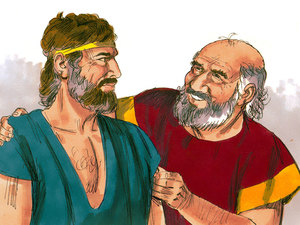
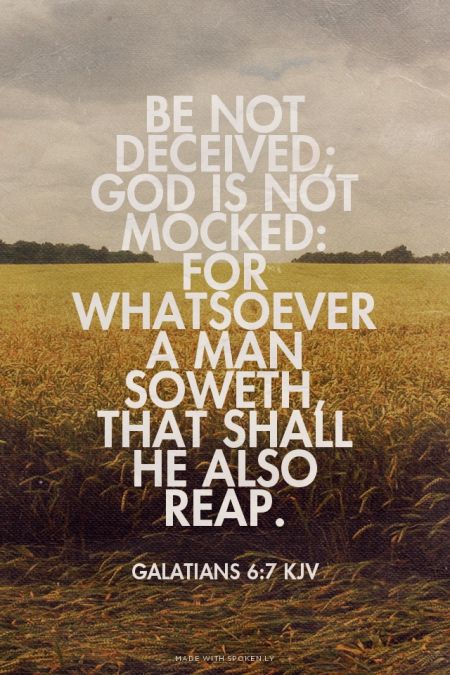
After Jacob grows exceedingly rich, some of Laban’s sons become jealous and accuse him of stealing their inheritance. But despite Laban’s harsh work environment, God has proven Himself faithful to Jacob (vs. 4-13).

You may read Genesis 31:1-55 here: Bible Gateway.

Twenty years slipped by since Jacob’s last recorded revelation from God. Jacob was still in the promised land at the time (28:10-22). Finally, God tells Jacob to go back to the land of his fathers (vs. 3). I wonder if God’s directive felt like a breath of fresh air to Jacob. Or, did the potential dangers gnaw at him with the high probabilities: Laban’s pursuit from behind and Esau’s revenge up ahead?

Whatever thoughts and anxieties swam through Jacob’s mind, he states the facts to his wives, Rachel and Leah. God is mentioned by name seven times during their discourse. Even the tension between the sisters can’t squelch their unanimous conclusion. Possibly for the first time, the awkward threesome agree on something: Laban, (their dad), doesn’t hesitate to walk over his own flesh and blood if it benefits him financially. (Okay, that’s my interpretation.)

The NIV Life Application Study Bible notes: “According to custom, they [Rachel and Leah] were supposed to receive the benefits of the dowry Jacob paid for them, which was 14 years of hard work. When Laban did not give them what was rightfully theirs, they knew they would never inherit anything from their father.”

Small wonder, Rachel and Leah support Jacob’s plan. Together they would take Jacob’s acquired wealth and vamoose.

So Jacob saddles up his camels with family and belongings in tow for the 300 mile trek from Haran to mountainous Gilead. But first, Jacob and Rachel would combine for a double whammy on Laban: 1) Rachel steals Laban’s small household idols while he shears sheep; 2) Jacob goes against God’s way by not informing Laban of their departure, (despite following God’s will to go home).

Small wonder, Laban chases after Jacob when he learns they skedaddled. Fortunately for Jacob, God reveals Himself to Laban in a dream. After traveling seven days, (Jacob had a three-day head start), Laban confronts Jacob in Gilead: “Why did you run off and secretly deceive me? . . . . Why did you steal my gods?”

Jacob confesses his fear of Laban taking his daughters by force as the motivating factor. Clueless that Rachel stole her father’s idols, Jacob tells him to search their belongings. “If you find anyone who has your gods, he shall not live.”

Neither Laban nor Jacob realize Rachel is the culprit as she hides the idols inside her saddle. When Laban searches Jacob’s tents, Rachel—matching her father’s wit—gives a female excuse for not getting off her camel. (I don’t know why he swallowed the fly, I mean bait, but fortunately he does!)

With Laban’s unsuccessful search, Jacob releases twenty years of pent-up frustration. But even in his rebuke, Jacob’s faith is evident (vs. 36-42).

This section ends with Jacob setting up a stone as a pillar. The two men make an agreement that neither party would harm the other, nor Jacob mistreat Laban’s daughters. Although both Jacob and Laban use God as their witness to make the agreement binding, Laban swears by the pagan god his father worshiped (31:53). This is the last mention of Laban in the Bible (vs. 55).

Reflect

Why did Rachel steal her father’s idols? Was she reluctant to let go of her father’s religion, thinking it would bring her luck? Did she do it out of revenge? Or was it to secure her family’s inheritance? Whatever her reasons, God makes His position clear on idol worship: Exodus 20:30; Deuteronomy 5:7; 32:16.

Jacob was so sure no one had stolen Laban’s idols that he vowed to kill the crook. How horrible it would have been for everyone, especially Jacob, if Laban found out the truth. That’s a good lesson to take to the bank: It’s safer to avoid making rash statements, (even when we’re sure of something!)

Jacob’s work ethic under Laban was commendable. Although Jacob followed God’s will to go home, his way of fleeing without first telling Laban, however, showed his faith still had room to grow.

Lastly, Laban mastered using people. He controlled two generations of marriages in Abraham’s family (Rebekah, Rachel, Leah). But despite his efforts, God’s plan still carried on. And in the end, Laban was the one used.
Jacob’s Flocks Increase, Genesis 30:25-43

After Rachel gave birth to Joseph, Jacob said to Laban, ‘Send me on my way so I can go back to my own homeland. Give me my wives and children, for whom I have served you, and I will be on my way. You know how much work I have done for you.” –Genesis 30:25-26

Jacob probably never dreamt that he would spend 20 years of hard labor under his uncle Laban in Paddan-aram (31:38). His first seven years would seem a breeze, at least in comparison to receiving his dream wife, Rachel. But Laban outwitted his nephew.

Jacob’s deception with Esau and his father came back to haunt him. Instead of receiving Rachel as his bride, Laban gave him Leah.

And the Trickster got tricked.

But even though Laban conned Jacob into another seven years of toil in exchange for Rachel, Jacob kept his end of the bargain. However, another six years would slip through the hourglass before Jacob finally breaks free from Laban. Meanwhile, eleven sons and one daughter are born.

You may read Genesis 30:25-43: Bible Gateway.

Jacob couldn’t just pack his bags and leave at leisure. Shared ownership complicated the authority structure in this Eastern family. To leave without receiving his uncle/father-in-law’s permission could lead to war within the family clan.

Laban’s desire for Jacob to stay isn’t because he loves him, but rather because his prosperity is due to Jacob’s presence. When Laban claims that his idols have enlightened him to this fact, Jacob candidly tells him that God’s blessing is due to His faithfulness and Jacob’s hard work.

Jacob’s answer to Laban’s increased wage offer indicates that he has prepared for this moment (vs. 31-33).

Don’t give me anything. But if you will do this one thing for me, I will go on tending your flocks and watching over them: Let me go through your flocks today and remove from them every speckled or spotted sheep, every dark-colored lamb and every spotted or speckled goat. They will be my wages,” (vs. 31-32).

Laban agrees to this arrangement.

Jacob’s proposal favors Laban. Layman’s Bible Commentary notes: “Goats in the Middle East are generally black or dark brown (Song of Solomon 4:1), and the sheep are always nearly white (Ps. 147:16; Song of Solomon 4:2; 6:6; Daniel 7:9).”

Laban, however, still attempts to cheat Jacob (vs. 35-36). He places the speckled animals under the care of his sons. Then he separates them from Jacob with a good three-day journey distance.

Meanwhile, Jacob continues caring for the rest of Laban’s flocks and counters with a God inspired plan involving tree branches (31:10). How did these visuals help increase the streaked characteristics in the young? Although some herdsmen believed that vivid impressions at mating time influenced their offspring, God’s promise of provision and selective breeding were most likely the contributing factors to Jacob’s success.

This chapter ends with the report that Jacob “grew exceedingly prosperous” with flocks, servants, camels and donkeys.                 (Picture source: bible.com)

REFLECT

Selfishness is concern for self at the expense of others.

While most of us battle selfishness at times, some—like Laban—embrace it with outstretched arms. In a culture steeped in “me-ism,” how do we free ourselves from its grasp?

One effective way to battle selfishness is to read and meditate on Scripture such as the following: Proverbs 18:1; Galatians 5:19-21; Philippians 2:3; James 3:16.

Another tool to oust selfishness is to exercise kindness. “[T]here’s a great deal of evidence showing the more someone receives or witnesses kindness, the more they will be kind themselves, which leads to upward spirals of love and generosity in a relationship,” says Emily Esfhani Smith.

This past week I was treated to a random act of kindness. After unplugging our bathroom faucet and checking a couple of other dripping faucets, our plumber says, “I won’t charge you. It was a simple procedure.”

I’m sure my jaw dropped. There had always been a service fee just to have him drive to our home. I couldn’t help but think: Who does that? Obviously my plumber does! Needless to say, he made my day as I thanked him (and God) for his gift of generosity during a bill filled month.

Not only is it refreshing to observe and/or receive an act of kindness, but it’s also rewarding to be on the giving side. Jesus Himself said, “It is more blessed to give than to receive,” (Acts 20:35).

There are many ways to give of one’s time, talent, spiritual gifts and money. Let’s ask God: who, what and where He desires for us to give. Then let’s go ahead and make someone’s day by stepping out in obedience.

Have a great week! 🙂

Jacob’s Children, Genesis 29:31-30:22

When Rachel saw that she was not bearing Jacob any children, she became jealous of her sister. So she said to Jacob, ‘Give me children, or I’ll die!’” –Genesis 30:1

With Jacob’s double marriage to Leah and Rachel, the sisters’ jealousy and rivalry isn’t a surprise. Each sister wants what the other has: Leah longs for Jacob’s love. She strives to earn his affection by bearing him children. Rachel already has Jacob’s love, but she envy’s Leah’s ability to bear children.

For all of Leah and Rachel’s efforts in their bitter childbearing race, it is God who opens the womb.

You may read Genesis 29:31-30:22 here: Bible Gateway.

All of the great patriarch’s (Abraham, Isaac, and Jacob) had wives who struggled conceiving. While Jacob followed Grandpa Abraham’s example of having relations with his maidservant in order to have his own child, Isaac chose another path. Instead of following the legal and culturally accepted practice of having children through his wife’s maidservant, he prayed to God when Rebekah was barren. God eventually answered his prayer and blessed Rebekah with twins.

Jacob’s children

The twelve tribes of Israel descend from a very blended and conflicted family. The following chart shows Jacob’s children in the order they were born.

12_sons_of_jacob-12_tribes_of_israel_chart

Names in the Old Testament

Names in the Old Testament were often given to reflect the situation at the time of birth. Sometimes a person’s name was later changed because his/her name and character didn’t match.

Six of Israel’s tribes descend from Leah. She birthed the following children.

  • Reuben means “see, a son”.
  • Simeon means “hear” or “listen”.
  • Levi means “attached” or “associated”. The royal priesthood descends from Levi’s tribe.
  • Judah means “praise”. The Messiah would come from this tribe.
  • Issachar sounds like the Hebrew word for “reward”.
  • Zebulun probably means “honor”.
  • Leah’s seventh baby was a girl (Dinah).

In Rachel’s frustration of infertility, she adopts her maidservant Bilbah’s babies. Rachel falsely assumes God is pleased with this move. Bilbah birthed two boys.

  • Dan means “He has vindicated me”.
  • Naphtali means “my struggle”.

When Leah isn’t pregnant, she also offers Jacob her maidservant, Zilpah, who births two boys.

  • Gad means “good fortune” or “a troop”.
  • Asher means “happy”.

After 14 years of infertility, Rachel births Joseph. She would also eventually birth Benjamin.

  • Joseph means “may he add”.
  • Benjamin means “son of my right hand”.

Reflect

Although Jacob was tricked into marrying Leah, he would have saved his family some grief if he would have considered the long term consequences of taking both Leah and Rachel’s maidservants as concubines. However, the most heated rivalry sparked between Leah and Rachel’s children (and descended tribes).

When Rachel couldn’t bear children she lost sight of Jacob’s commitment to her. Instead of accepting what he had already given her—devoted love—seeds of envy toward Leah took root. Heated competition of who could give Jacob the most children sprouted thorns of disunity among the family.

Rachel’s attempt to earn what Jacob had already given her, (love), paints a bigger picture. Perhaps the following question is what we should ask ourselves: Like Rachel, are we trying to earn God’s love?

Without God’s Word, it’s easy to believe these false ideas: 1) We’re good enough—at least better than many—to earn God’s love; 2) God’s love will never be ours because we can never attain it.

While it’s true that we can’t earn God’s love, we can know His love because He gives it freely. If the Bible only paints one picture, it’s this: God loves us! The vibrancy of His incredible mercy and patience are highlighted throughout His Word. He already took care of the problem that separates us from Him—our sin—when He sacrificed His Son on the cross.

When we accept and embrace God’s love, we are free from striving to earn His approval. We can walk with Him in joy and thankfulness.

Jacob Arrives in Paddan Aram, Genesis 29:1-30

The plan was simple. Jacob would stay in Haran a few months, find a wife, and then return home to Beersheba. But unbeknownst to him, his stay would encompass 14 long years of labor after being fooled by uncle Laban. (This would not be a funny April Fool’s joke!) 🙂

You may read Genesis 29:1-30 here: Gateway Bible.

Now that Jacob has God’s promised blessing—which he previously strived to gain by his own efforts—Jacob is infused with purpose. After days of travel from Bethel, Jacob finally arrives in Haran. He stumbles across a field where three flocks of sheep lie near a well. He learns from the shepherds that they won’t remove the large stone from the well’s mouth to water their flocks until all the sheep have arrived.

But when Rachel draws near with her father’s flock, Jacob springs to action. Smitten by her beauty, he not only removes the big stone from the well’s mouth, but also plants a kiss on—or near—Rachel’s mouth.

Layman’s Bible Commentary notes: “Most likely, he [Jacob] kisses her on both cheeks, a traditional greeting. However, it is worth adding that this appears to be the only case in the Bible of a man kissing a woman who is not his mother or wife. So it is possible that this was more than just a ‘holy’ kiss.”

Laban Negotiates Wages with Jacob

freebibleimages.com

freebibleimages.com

Jacob is welcomed into the family. Even though Laban owns many sheep, he doesn’t negotiate payment for Jacob’s labor until Jacob has toiled a month for him. But Jacob is quick to respond to his wage inquiry: “I’ll work for you seven years in return for your younger daughter Rachel.”

Verse 17 says, “Leah had weak eyes, but Rachel was lovely in form, and beautiful.” Rachel in Hebrew means “ewe lamb,” while Leah (the oldest daughter) means “cow”.

Layman’s Bible Commentary suggests that verse 20 is often misunderstood to mean that time passed quickly for Jacob. “More likely it means that the price seems insignificant when compared to what he is getting in return.”

The Deceiver is Deceived

Finally! Seven years of toil have passed for Jacob. The wedding ceremony has arrived. But when Jacob opens his eyelids the next morning, he is astonished to find Leah next to him.

Jacob is enraged. “Why have you deceived me?”

“It is not our custom here to give the younger daughter in marriage before the older one.”

How could Laban fool Jacob? Layman’s Commentary notes: “The most likely explanation is that when Laban brings his daughter Leah to Jacob, it is late and dark, and she is veiled from head to toe. It seems that the wedding feast hosted by Laban is an intentional ploy to dull Jacob’s senses with wine (29:22).”

After Jacob’s marriage consummation to Leah, Jacob receives his true love, Rachel, in just eight short days. However, Laban has also conned Jacob into working another seven years as an exchange.

Reflect

1ffaa62d05c5a2528d8737195f2a0f42

When Peter asked Jesus: “How many times shall I forgive my brother or sister who sins against me? Up to seven times?” Jesus answered: “I tell you, not seven times, but seventy-seven times,” (Matthew 18:21-22). See Matthew 18:21-35 for “The Parable of the Unforgiving Debtor”.)

Ironically, Jacob meets his own sin of deception in uncle Laban. Jacob’s previous scam and dishonor of the firstborn’s birthright and blessing principle is now honored through the union of Laban’s firstborn daughter—Leah—to Jacob.

Although tricked by Laban, Jacob keeps his part of the bargain. Patient and diligent, he works another seven years without plotting revenge.

When we nurse a grudge and/or plot revenge, we are not only blind to God’s perspective, but also become imprisoned to bitterness. Offering forgiveness is never easy when offended or hurt. But God expects it, especially since He forgave us.


Why Celebrate Easter?

For many, Easter stirs memories of family gatherings, chocolate bunnies, egg hunts and the traditional church visit.

"Ready, set, GO!"

“Ready, set, GO!”

But the roots of Easter form the core of Christianity. Easter is a celebration of God’s unconditional love.

God loves you and offers a wonderful plan for your life:

  • “For God so loved the world that He gave His one and only Son, that whoever believes in Him shall not perish but have eternal life.” –John 3:16
  • In regards to a full and meaningful life, Jesus said: “I came that they might have life, and might have it abundantly.” –John 10:10

First the Bad News

Ever since Adam and Eve sinned, we have all inherited the sin nature. Because of our stubborn self-will our fellowship with God has been broken. Our sins—both active rebellion and passive indifference— have separated us from God: his love and plan for our lives.

  • “All have sinned and fallen short of the glory of God.” –Romans 3:23
  • Because God is holy and just He will punish sinners: “The wages of sin is death,” [spiritual separation from God]. –Romans 6:23

But God doesn’t want to leave us in our wretched sinful state. From Genesis to Revelation, His sovereign plan enfolds.

God’s Provision

c6448c17cdf8e5f761a08c8e52680aebGod’s provision for our sin is Jesus Christ. We can know and experience God’s love and purpose for our lives through Him.

  • Jesus died in our place: “God demonstrates His own love toward us, in that while we were still sinners, Christ died for us.” –Romans 5:8
  • Jesus rose from the dead: “Christ died for our sins. . . He was buried. . . He was raised on the third day, according to the Scriptures . . . He appeared to Peter, then to the twelve. After that He appeared to more than five hundred.”  -1 Corinthians 15:3-6

Jesus Is the Only Way to God

Jesus bridged the gulf that separates us from Him when He died on the cross to pay the penalty for our sins.

  • Jesus said: “I am the way, and the truth, and the life; no one comes to the Father but through Me.” -John 14:6

But it’s not enough just to know these truths.

We must individually receive Jesus Christ as Lord and Savior. Then we can know and experience God’s love and purpose for our lives. “Now this is eternal life: that they may know you, the only true God, and Jesus Christ, whom you have sent.”  -John 17:3

God’s offer of salvation and fellowship is a free gift that we receive in Christ through faith: “By grace you have been saved through faith; and that not of yourselves, it is the gift of God; not as a result of works that no one should boast.” –Ephesians 2:8-9

  • “As many as received Him, to them He gave the right to become children of God, even to those who believe in His name.” -John 1:12
  • We experience a new birth when we receive Christ. (See John 3:1-8.)

Salvation

Salvation is not dependent upon our emotions, nor does it stand alone on intellectual agreement. Receiving Christ is as an act of the will through faith. Repentance involves removing self from the throne to placing God on the throne of one’s life. When we place Christ on the throne of our heart, He offers peace and joy, even when circumstances would dictate otherwise.

My prayer for you—if you have never entered into a relationship with God—is that you would seize this moment. The following is a suggested prayer, (although God isn’t as concerned about your words as He is with your heart’s attitude): “Lord Jesus, thank you for dying on the cross in my place. Please come into my life as my Lord and Savior. Thank you for giving me eternal life and forgiving my sins. Help me to be the person you desire.”

For more questions about life and God please visit: EveryPerson.com. Also, the following sites are helpful resources in getting to know Christ better: Cru.org, StartingWithGod.com.

For those of us who have already placed our trust in Christ, may we continue to grow in Him, be thankful for Christ’s sacrifice, and share the reason for our hope with others.

(Related posts: New Life, Today’s Word, Separation Anxiety or Assurance?)