How Can I Enhance My Prayer Life? (Jonah 2)

In my distress I called to the Lord, and he answered me. From deep in the realm of the dead I called for help, and you listened to my cry.” –Jonah 2:2

Bible teacher, Priscilla Shirer, observes how we can enhance our prayer lives. Three major prayer themes emerge from Jonah, chapter 2: the pattern of prayer, the passion of prayer, and the posture of prayer. You may read Jonah 2 here: Bible Gateway.

Pattern of Prayer

Jonah must have had an arsenal of Scripture stamped in his memory bank the day he cried to God inside the big fish. If he had a scroll tucked inside his cloak it would have been water stained and ruined. But Jonah managed to thread some strands of Scripture from Psalms, weaving them into a personal prayer tapestry to frame his unique situation. Consider the following pairs of verses that share similar terminology or thoughts:

Jonah 2:2—Psalm 30:3

Jonah 2:3—Psalm 42:7

Jonah 2:5—Psalm 69:1-2

Jonah 2:7—Psalm 18:6

Jonah 2:9—Psalm 66:13-14

Our prayers are most effective when they originate from God’s Word. Like Jonah, have we taken time to allow God to etch His Word on our hearts? If so, then we will also have a framework of verses to piece together for prayer in difficult times.

Passionate Prayer

Jonah wasn’t speaking in a monotone manner when he prayed. Did his cry to God echo inside the fish’s intestinal walls? I wonder. The Hebrew word “cried out” is only used 22 times in the Bible and implies intensity of an act reserved only for the most earnest prayers. While fervent prayer is not a guarantee that God will answer “yes”, it certainly seems to capture His attention, (see Exodus 2:23-25 and 2 Samuel 22:1, 4-7).

Raising our voices, however, is not the goal of prayer. God desires for us to pursue Him with our hearts and minds. He doesn’t want our meaningless repetition of words. Intentional prayer must employ our will, mind, and emotion.

Posture of Prayer
My kids and I have this unspoken understanding. When I pretend to pull a string up from their heads at the dinner table, they know I mean, “Sit up . . . shoulders back . . . stop slumping!”

The posture of prayer is the third major lesson we learn from Jonah. Being in dire straits, one would think Jonah’s prayer would be for deliverance. However, his prayer isn’t for deliverance, but rather a prayer of deliverance. Jonah gives thanks in the midst of his grave condition. Unsure how God will deliver, Jonah determines—God willing—that he will go back to the holy city and participate in the thanksgiving offering. His posture would be “with a voice of thanksgiving.” Jonah intends to not only give in the animal and cereal sacrifices, but also with a verbal sacrifice of praise.

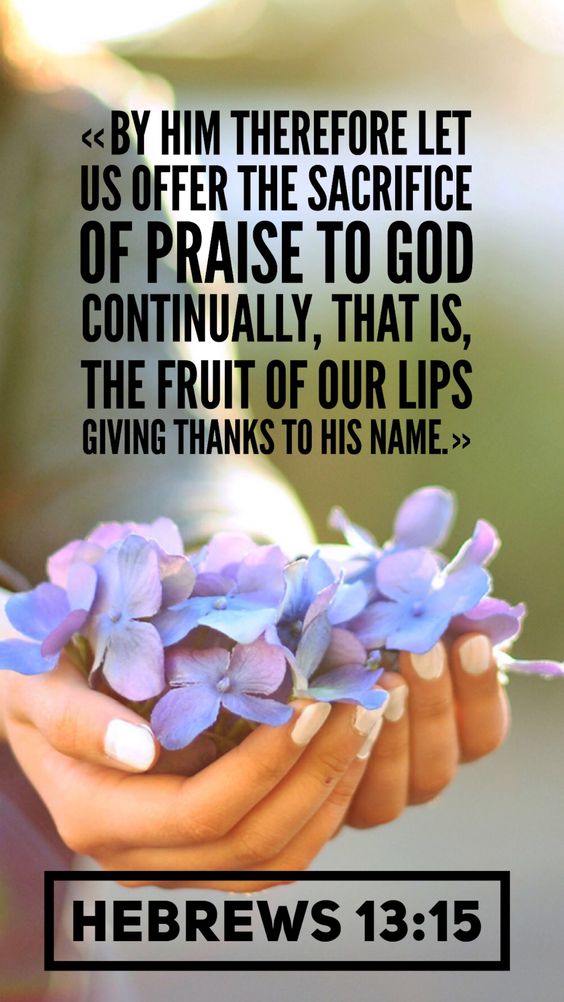
While we are no longer under the Old Covenant with the ceremonies and sacrifices of the Old Testament temple, we can still offer God a sacrifice of praise (Hebrews 13:15). 

Finally, Jonah’s deliberate prayer ends with “Deliverance is from the Lord” (NRSV). Shirer writes: “The Hebrew word used for deliverance is a derivative of the name Yesuah . . . . The Christian reader who hears this conclusion to Jonah’s prayer in its original language cannot miss this word that sounds so much like the Hebrew name of Jesus which has meant deliverance and salvation for the peoples of the world.”

What a beautiful reminder: Salvation and deliverance come from the One true Lord and Savior, Yesuah.

If you have been following Pastor Cliff Purcell’s podcasts on “The Lord’s Prayer”, here is another great message about praying (and wrestling) for God’s will: A Family Conversation – Week 5 (Feb. 11, 2018).
Jonah and the Slippery Slope of Sin

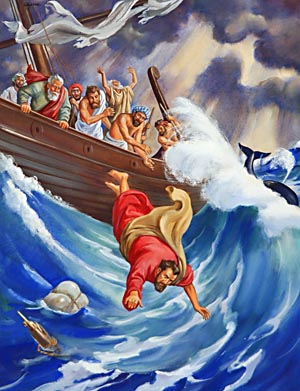
So they said to him, ‘What should we do to you that the sea may become calm for us?’—for the sea was becoming increasingly stormy.” – Jonah 1:11

Jonah was the only prophet recorded in Scripture who ran away from God. Priscilla Shirer (Jonah, Navigating a Life Interrupted), writes: “When he first started running, Jonah in essence stepped down from his prophetic office and went down to Joppa—geographically down-hill. He found a ship and went down to it. His descent didn’t stop there. Once on board he went down into the hold to get some sleep (1:5).”

After getting stuck in a web of consequences—including being thrown overboard, swallowed by a big fish and tangled in slimy seaweed—Jonah learns it would have been much easier just to obey in the first place.

So how does a successful prophet/person spiral downward so quickly? The same way any of us spiral down the slippery slope of disobedience. It begins with a justified thought: I’ve worked hard all week, what’s a little flirting? . . .  Maybe I didn’t tell the whole story, what they don’t know can’t hurt . . . . If my boss knew that I barely make ends-meet he wouldn’t care that I pocket a donation now and then.

The justified thought followed by a justified action initiates the descent. It doesn’t take a rocket scientist to figure out sins’ negative ripples affect not only the one being disobedient, but also affects surrounding lives.

After Jonah finally told the sailors he was running from God, the sailors reeled not only from the storm, but also reeled for life saving answers. Shirer writes: “We easily become paralyzed by fear or guilt when our lives seem to whirl out of control. A glimpse at our lives with all of their spinning parts can make us dizzy with disgust at the mess we may have made. It’s easier to just sit, soak, and be sour. That’s what the enemy would like. He’d prefer we get lazy, complacent, and apathetic with distance between ourselves and God’s best. But if, like the sailors, we see the connection between our chaotic circumstances and our own decisions, we must ask, ‘Now what?’”

So what should we do when we find ourselves in the belly of our consequences? In last week’s post, Jonah’s Unhallowing of God’s Name, Jonah had finally answered the sailors’ questions about his identity. His answers, along with his actions, parallel important New Testament teachings for reconciliation with God.

Steps Toward Reconciliation with God

Acknowledge our sin (Jonah 1:12) – “I acknowledge my sin to You … I said, ‘I will confess my transgressions to the Lord’; and You forgave the guilt of my sin,” (Psalm 32:5).

Accept God’s discipline (Jonah 1:15) – “It was good for me that I was afflicted, that I may learn Your statutes . . . .  I know, O LORD, that Your judgments are righteous, and that in faithfulness You have afflicted me,” (Psalm 119:71, 75). God doesn’t discipline for sport. Rather, He wants to prepare us for His purposes by reviving and realigning us.

Ask for forgiveness (Jonah 2:2) – Repentance has two parts: 1) Confession means to agree with God about any rebellion or sin we harbor and ask Him to cleanse us; 2) Change means to change our attitude, mind, and actions . . . turn away from the sin and turn toward God. Although Jonah’s heart still didn’t align with God’s heart, his actions finally complied with God. Sometimes we just need to step out in faith and allow God to help us align our hearts and feelings in time. I love that no matter how far we have slipped, or how much time we’ve lost, God is faithful and completely forgives (1 John 1:9). He is the master of taking our messes and shaping it into something beautiful, replacing the old with fresh life in Him.

Act on God’s direction (Jonah 2:9; 3:3) – Many commentators believe Jonah 2:9 is the heart of the book of Jonah since he decides to obey God’s directives. After being spit out on dry land, Jonah realizes that Yahweh has preserved his life through a fish named “grace”. “But I will sacrifice to You with the voice of thanksgiving. That which I have vowed I will pay. Salvation is from the LORD.” Shirer writes: “True sacrificial obedience would cost Jonah something more than just a one-time decision to go to Nineveh. Likewise, we must be willing to obey the small details along the pathway to obedience to the Lord as well.”

Has God’s divine interruption revealed anything you are holding on to too tightly? Is there a goal, comfort, ambition, or sin He is asking you to release? If so, release it to the One who loves you and knows you best. Then go where He is leading.

While Jonah 1 records everyone praying except for Jonah, chapter 2 records a beautiful prayer of Jonah crying out to God. The bulk of his prayer highlights the depths he sunk both spiritually and physically.

For more on prayer, specifically unwrapping the Lord’s Prayer, you may listen to Pastor Cliff Purcell’s podcast here: A Family Conversation – Week 4 (Feb. 4, 2018). Blessings!

Jonah’s Unhallowing of God’s Name

I love that God is always on the move, working in us and around us, even in spite of our failures to acknowledge Him or act in ways that don’t honor Him.

Case in point: Jonah.

Jonah—the successful Israelite Prophet—paid the fare to sail from Joppa to Tarshish. In his justified rebellion, he thought if he could run as far as possible from where God’s tangible presence rested, on His people and in His temple, He might escape a convicting one-on-encounter with God. So not only did he refuse to follow God’s order to go to Nineveh to preach, but also set out on a 2,000 mile journey in the opposite direction.

As Jonah crashes (sleeps) in the hold of the ship, God whips up a furious storm. The pagan sailors—from a polytheistic culture—cry out to their gods, whom they believe not only control a part of nature, but also are easily offended. Just maybe the sailors could garner forgiveness for any spiritual offense they unknowingly made.

The storm, however, rages on. So they toss all the cargo overboard in hopes to stay afloat. But that doesn’t help either. What about that mysterious sleeping guy, completely oblivious to their peril? They rouse him. “What’s this? Sleeping! Get up! Pray to your god! Maybe your god will see we’re in trouble and rescue us,” (Jonah 1:6, MSG). Upon drawing lots, Jonah receives the short straw and finally fesses up: “I’m a Hebrew. I worship God, the God of heaven who made sea and land” (vs. 9).

Terrified from the realization that Jonah is on the run from this powerful God, the sailors make every effort to abort Jonah’s suggestion of throwing him overboard to calm the sea. But the wind and waves only worsen.

Despite Jonah’s rebellion and detachment from caring about the sailors, God uses the storm and Jonah’s words—which don’t align with his actions—to show them who God is. So they cry out to the Lord God and ask Him to not hold their actions against them as they throw Jonah overboard. You know the rest of the story.

Was Jonah ashamed to tell the sailors more about his God? He certainly wasn’t acting as a good representative. They were the ones to rouse him and ask him to pray. But before we pounce on Jonah too much, what about us? Do our words and actions accurately reflect the holiness and grandeur of God? If I’m honest, there have been times when unbelievers have acted more Christlike. . . . Ouch!

Just How important is it for believers to point others to God and His holiness through words and actions? When Jesus’ disciples asked Him how to pray—after clarifying whom to pray, “Our Father”—Jesus instructs them to pray: “Hallowed be Thy name.” But what exactly does this mean? My pastor, Cliff Purcell, explains the meaning and application of these words. You may listen to his podcast—“A Family Conversation – Week 3 (Jan. 28, 2018)”—here: Our Father, “hallowed” . . . what’s that?

Have a great week!

How Should I Pray?

As Christians, we’re called to pray. But do you ever struggle with prayer? I know I have, and still do at times: how to pray; what to pray; when to pray.

Most Christians are familiar with the Lord’s Prayer. The first two words of the Lord’s Prayer, “Our Father”, are significant. But many people have difficulty associating God as good since He is called “Father”. God, however, is not only good, He is also a good and perfect Father who is good to His children.

I am enjoying my pastor’s current series on prayer. You may listen to Cliff Purcell’s podcast here: “A Family Conversation – Week 2.” (Scroll down to “Media Archive”, January 14, 2018.)

Have a wonderful week!


Unshakable Hope

My heart and prayers go out to the family and friends of WSU quarterback Tyler Hilinski, who appears to have died from suicide on Tuesday. Although I didn’t know Tyler personally, he’s remembered on campus for his sunny disposition. Tyler was the presumptive starting quarterback going into next season. He made some key contributions in eight games this past season, including leading his team from a 21-point deficit in the fourth quarter to beat Boise State University 47-44 in triple overtime.

(Google search)
What Is Salvation?

I don’t know anymore about Tyler’s situation, but it’s disturbing to hear of anyone taking his/her life. According to National Data on Campus Suicide and Depression, one out of every 12 college students makes a suicide plan and 7.5 students per 100,000 kill themselves.

This incident is a wake up call for me to be more aware of those I encounter and be more intentional to connect with people. Although I’m a proponent of social media, it shouldn’t replace personal relationships. I admit, I cherish “likes” and thumb’s up, but we all need face-to- face time.

For believers, it’s also a good reminder to always be prepared to share the hope we have in Christ Jesus. A hope that can’t—or shouldn’t—be shaken when we’re grounded in Him. It’s the only hope I held onto when I experienced an episode of depression throughout my college years. I don’t want to make this post about me, as I know many people fight this battle, but if it helps someone better understand depression you can find my story here: My Lifeboat.

I feel that some Christians think believers should be immune to this struggle. I know at the time that I felt guilty for even having this struggle. But as none of us are immune to physical ailments, why would there be an exception to mental ailments?

Moving on to a lighter note and following last week’s theme, “God Interruptions”, I bring you Heisman Trophy winner and professional athlete, Tim Tebow. Although most of us aren’t called to be platform athletes or speakers, God still uses us in ways beyond our comprehension when we yield to His promptings, however small they may seem. Although Tim could have easily dismissed what God laid on his heart, he chose to yield to God’s prompting instead. I really enjoyed his story of how God blessed his seemingly small act of faith and trust you will too!