Does Archaeology Support the Bible?

Over and over again the Bible has been vindicated from Genesis to Revelation. The superiority of Genesis 1–11 has been established, and the patriarchal backgrounds have been endorsed.”  – Clifford Wilson

Before moving on to The Abrahamic Covenant, Genesis 14-17, I thought it would be interesting to investigate archaeology discoveries that confirm the account of Genesis. Although I believe the Bible is God’s revealed Word and that God doesn’t need further proof of His truth, archaeology is a great tool for understanding Bible history and growing one’s confidence in the accuracy of biblical accounts.

Henry Morris in The Genesis Record writes: “It is significant that these excavations do not show primitive, half-bestial cultures, newly evolved from an animal ancestry, but high civilization, exactly as suggested in Genesis. . . . Not only did the ‘intelligentsia’ of Ur know how to read and write long before the time of Abraham, but so did even the ordinary citizens. When Abraham lived there, Ur had already begun to decline somewhat from a former glory.”

Although the exact chronology of Genesis 11 is uncertain, there is ample archaeological evidence that suggests the names and events in Genesis are not just legendary Jewish heroes and places, but were real people and places.

Clifford Wilson in “Does Archaeology Support the Bible?” writes: “Archaeologists are scholars, usually academics with interest in the Bible as an occasional source book. A substantial number of scholarly archaeologists are committed Christians, but they are a minority. Many people believe that all archaeologists set out to verify biblical history, but that is not the case. Many excavators have virtually no interest in the Bible, but there are notable exceptions.”
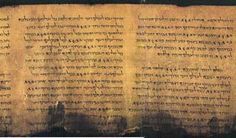
Dead Sea Scrolls

Dead Sea Scrolls

“Where confirmation is possible and has come to light, the Bible survives careful investigation in ways that are unique in all literature. Its superiority to attack, its capacity to withstand criticism, and its amazing facility to be proved right are all staggering by any standards of scholarship. Seemingly assured results ‘disproving’ the Bible have a habit of backfiring.”

“The more this new science of archaeology touches the records of the Bible, the more we are convinced that it is a unique record. At many points it is greatly superior to other writings left by neighboring people.”

Clifford Wilson’s article may be found at this link: Does Archaeology Support the Bible? It’s long, but an interesting read. Wilson delves into three major evidences for each of the following biblical accounts:

  • Genesis 1–11, 11-36, 37-50
  • Exodus to Deuteronomy
  • Joshua to Saul
  • David to Solomon
  • the Assyrian Period
  • the Babylonians and Nebuchadnezzar
  • Cyrus and the Medes and Persians
  • Ezra and Nehemiah
  • the Dead Sea Scrolls
  • the Person of Our Lord Jesus
  • the New Testament, the Early Church, and the Early Years of Christianity

***

I hope you are enjoying the end of summer. It rained most of today, which is a refreshing change. Have a wonderful weekend! 🙂


Abram’s Third Revelation, Genesis 13:14-18

Lift up your eyes from where you are and look north and south, east and west. All the land that you see I will give to you and your offspring forever. I will make your offspring like the dust of the earth, so that if anyone could count the dust, then your offspring could be counted. Go, walk through the length and breadth of the land, for I am giving it to you.” – Genesis 13:14-17

This is the second part from last week’s post, Abram and Lot Separate.

*****

The idea of walking through the land (vs. 17) appears to be symbolic. Armies in the ancient Near East declared their victory by marching through a defeated territory.

Layman’s Bible Commentary makes three observations about God’s third revelation to Abram:

  1. God will give the land to Abram and his descendants forever.
  2. Abram’s heir will be his own child.
  3. Abram’s descendants will be innumerable.

These promises were great news for Abram, especially 3a6bfc15a12e519590af3c1b7018482eas Lot parted east toward the more fertile plain of Jordan and Abram headed back into the hill country of Canaan. The reality of God’s promises, however, would not come into fruition for a long time.

For neither Abram, nor his descendants (especially the promised seed Isaac) owned the land for most of history. And although Israel regained possession as a nation in 1948, they currently possess only a fraction of the land God has promised.

The Land of Canaan

Of the promise of the land, Henry Morris in The Genesis Record notes: “This promise must either be taken in the spiritual sense (applying it to a spiritual land of promise, as so interpreted by many expositors) or else ascribed to a time yet future. Since God promised the land to Abram and his seed forever, this can ultimately, if taken literally be fulfilled only in the new earth of Revelation 21. It will quite probably be fulfilled precursively, however, during the coming millennial age.”

Innumerable Descendants

Along with the Jews, Abram’s descendants include the Arabs. Although these two groups add up to a large number, the literal promise of Abram’s seed numbering “as the dust of the earth” and Abram becoming a great nation still awaits fulfillment.

Morris observes: “The New Testament makes it clear that ‘Abram’s seed’ was Christ Himself (Gal. 3:16), and that Abram is ‘father of all them that believe’ (Rom. 4:11), so that he also has a spiritual seed. It is evidently not a case of either this or that, but of both! The Jewish nation is to be eternally blessed as a nation, chosen of God in Abram. Likewise, the Christian Church, genuine believers in Christ from all nations, is itself a ‘holy nation’ (1 Peter 2:9), ‘Abraham’s seed, and heirs according to the promise’ (Galatians 3:29). Abram indeed was to be the ‘father of many nations’ (Gen. 17:5).”

Chapter 13 ends with Abram building another altar where he makes his home base in Hebron (18:1), which means “communion.” This is also where he is later buried (25:9).

Abram and Lot Separate, Genesis 13:1-13

So Abram said to Lot, “. . . . If you go to the left, I’ll go to the right; if you go to the right, I’ll go to the left.” – Genesis 13:8-9

I am breaking Genesis 13 into two posts. This post will look at Abram and Lot’s separation. Next week, I’ll explore Genesis 13:14-18 where God gives Abram a third revelation concerning his offspring and the land of Canaan.

You may read Genesis 13:1-13 here: Bible Gateway.

How long did Abram spend in Egypt due to famine? Scripture doesn’t say. Scripture also doesn’t mention Abram seeking God, or building an altar in Egypt. And instead of being a witness for God, Abram receives a rebuke from Pharaoh for not telling him Sarai is his wife. Even though Abram left Egypt very wealthy, he probably also carried shame and embarrassment with him.

Lot may have felt jilted as he had no choice in this Egyptian detour, which probably also served to escalate the tension between his herdsmen and Abram’s as they journeyed back through the Negev. No doubt, the damaged goodwill and trust set a poor example to the unbelieving Canaanites and Perizzites as they once again entered Canaan.

Divided Company

In this passage we see different attitudes in the heat of conflict from Uncle Abram and Lot.

Cherry tree blossom

Abram went back to the altar he built between Bethel and Ai and called on God (13:1-4). He most likely asked for forgiveness and once again enjoyed fellowship with God. When Abram and Lot’s combined possessions became so large that the land couldn’t support them together and their herdsmen began quarreling, Abram took initiative. He graciously offered Lot the first choice of land—at the risk of being cheated and denial of personal desires—in effort to resolve family peace.

Lot, on the other hand, should have insisted that Abram—his elder Uncle—choose first. But after surveying the fertile oasis of the Jordan—and not thinking through the influence wicked Sodom might have on his family—he made his decision. By outward appearance, Lot single-handedly won the trophy land. However, his choice revealed his character and priorities: greed, the desire for immediate gratification over long-term benefit, and vocation over family.

Questions to Consider

  • How do you handle family conflict?
  • How did Abram and Lot’s attitudes differ?
  • What can we learn from Abram’s approach to conflict and/or disunity?

Abram in Egypt, Genesis 12:10-20

This is the second part to last week’s post, Abram’s Call, Genesis 1-9. In summary, Abram obeys God by journeying to Canaan (Shechem). He then sets up camp between Ai and Bethel where he worships God. But when a severe famine strikes, Abram detours to Egypt: a land of plenty for both food and good land for his flocks.

You may read Genesis 12:10-20 here: Bible Gateway

Why would God call Abram to a land of famine?

Some commentators say this was a test of Abram’s faith, which Abram passed with flying colors. Instead of questioning God in the face of difficulty, he used his intelligence to temporarily move and wait for new opportunities.

Other commentators suggest Abram lacked faith that God would supply his needs in the midst of a famine. Although the Bible doesn’t comment either way, God clearly protected Abram and worked through his mistakes.

Verses 10-20 sound like an ancient soap opera. And though Abraham is a hero of faith, we glimpse a crack in his faith shield.

In fear of Pharoah noticing Sarai’s beauty (his wife)—and killing Abram—he devises a half-lie. Seventy-five year old Abram instructs Sarai, who is also his half-sister, to say she is only his sister if questioned. Beauty in those days was viewed differently than in our time and culture.

Medieval commentators suggest that what Abram hopes to get out of being Sarai’s brother is the right to receive and deny all suitors’ requests to be Sarai’s husband, in this way protecting her from adultery or bigamy. However, Abram is also acting in fear to save his life.

As if on cue, Pharoah does notice Sarai and takes her into his household. He also showers Abram with provisions of gifts: sheep, cattle, donkeys, camels, menservants and maidservants (12:15-16).

However, this arrangement is short lived. God inflicts Pharoah and his household with serious diseases. After pinpointing when and where his troubles began, Pharoah summons Abram and confronts him with the truth. For absolute truthfulness was a central feature of Egyptian ethics.

(Source: theBibleproject.com) Genesis 13:1,

(Source: theBibleproject.com)
Genesis 13:1, “And Abram went up out of Egypt, he, and his wife, and all that he had, and Lot with him, into the south.”

Abram appears to get away scott-free as Pharoah sends Abram, Sarai, and all their gifts away with just a scolding. But Layman’s Commentary Bible observes: “Everything Abram receives in Egypt later causes him trouble. Because of the great wealth he acquires from Pharaoh, Abram and Lot choose to separate (13:5-6). Hagar, the Egyptian maidservant who Pharaoh gives to Abram, brings division and sorrow with far-reaching consequences (16:1-16).”

Food For Thought

  • Have you ever told a half-lie only to find it spiral out of control? I’ve found that half-lies usually make matters worse.
  • “Faith is holding on to things your reason has once accepted in spite of your changing moods.”  – C.S. Lewis

Next week I’ll pick up on Genesis 13, Abram and Lot Separate. Have a great week!

Abram’s Call, Genesis 12:1-9

The LORD had said to Abram, “Leave your country, your people and your father’s household and go to the land I will show you. I will make you into a great nation and I will bless you; I will make your name great, and you will be a blessing. I will bless those who bless you, and whoever curses you I will curse; and all peoples on earth will be blessed through you.”                            Genesis 12:1-3

I broke Genesis 12 into two posts since this was getting long. This first part tells of Abram’s journey to Shechem in Canaan. Next week’s post will be about Abram’s detour to Egypt due to famine in the land, Genesis 12:10-20.

You may read Genesis 12:1-9 here: Bible Gateway.

Genesis 12:1-3 unveils God’s covenant with Abram. God promises a great blessing to Abram. He would create a special nation through Abram’s offspring, but there is one condition: Abram would have to obey and leave the comfort and security of his home.

In Genesis 12:1 the word “had” suggests that God’s message to Abram happened in Ur, even though 11:31 ends with Abram in Haran. Abram respected his father’s leadership, but after Terah died Abram obeys and sets out for the land of Canaan. Lot probably also believed God’s promises since he voluntarily went with Abram.

The original Hebrew wording “you will be a blessing” in verse 2 means, “Be a blessing.” Not only would God bless Israel—the nation God would craft from Abram’s family—but they would also bless the other nations. Israel was to be set apart, follow God, and influence those around her.

Through Abram’s family tree, Jesus Christ was born to save all people. Jesus also made a personal relationship with God possible.

Abram Worships God                                                                                                 

5751352_f520

Altars not only memorialized significant encounters with God, but also reminded the people of His provision and protection.

Abram stops at Shechem (12:6-7), near the middle of Canaan (Joshua 20:7), where the LORD appears to him a second time. Again, God promises to give this land to Abram’s offspring. Abram responds with worship and builds an altar.

Layman’s Commentary Bible notes: “The word translated worship carries the idea of not only acknowledging, but also proclaiming the name of the Lord.”

Abram Camps Between Ai and Bethel

Abram heads out again. This time he and his group camp in the hills east of Bethel (12:8) as Abram continues worshiping  God.

Biblos.com

Biblos.com

So What?

  • Is God leading you to a place of greater service and usefulness to Him? Like Abram, don’t let your present comfort and security keep you from God’s plan.
  • Regular worship reminds us of what God desires and motivates us to obey.
  • Although geographically small, the land of Canaan was the main area for most of Israel’s history. Not only are Christianity’s roots from here, but Christianity has spread and positively impacted the world.
  • America has been richly blessed as our forefathers and people honored God and sought to live by His principles, including the support of Israel. But when we as a nation turn our backs on God and His teaching we are inviting His judgment.