Sublime Design

I praise you because I am fearfully and wonderfully made; your works are wonderful, I know that full well.”   –   Psalm 139:14

KONICA MINOLTA DIGITAL CAMERA

You are not a mistake.

Psalm 139 testifies to God’s grand love and design for us. God is in the business of molding all our circumstances, confusion, shattered dreams, past mistakes and sins into a beautiful pattern―for those who love God (Romans 8:28).

The following acronym is helpful for me in determining my vocational work and place in God’s kingdom-call:

DESIGN

Desires: Consider your interests. Pay attention to stories and songs that stir your heart. I empathize with lost and hurting people. I also love God’s Word and desire to share His freeing truth. What are your heart’s desires?

Take delight in the LORD, and he will give you the desires of your heart.”    –  Psalm 37:4

Experiences: What do you know? What skills do you possess? How has God helped you in past challenges? I went through a difficult time in college. I’ve shared how God used and helped me through that painful season in Faith Writer’s book, Trials and Triumphs, along with 39 other writers. I would love to hear your story!

Spiritual Gifts: These are gifts given from the Holy Spirit, meant to be used in service of God’s church (Romans 12:4-5). The Holy Spirit empowers believers to contribute to the church’s unity and growth: both in numbers and in maturity. The following passages mention these spiritual gifts: Ephesians 4:11; Romans 12:6-8; 1 Corinthians 12:8-10; and 1 Corinthians 12:28-30.

Individual Style: Are you more compliant or dominant? Introverted or extroverted? Detached or compassionate? Cautious or Adventurous? I fall in the middle of introverted and extroverted. I am more compassionate, conscientious and adventurous than not. How about you? What are your dominant personality factors? God wants to use your unique style.

Growth Phase: God wants us to be lifelong learners in His Word (2 Timothy 2:15), in our kingdom-call, and in our vocations. What steps are you taking to grow in knowledge? My first priority is reading/studying the Bible and prayer. It’s where I learn to hear God’s voice/direction. Next, I want to grow as a parent and wife. I also want to develop my writing and photography skills through practice and classes.

Natural Abilities: God has given everyone abilities. I am not mechanical like my husband. But I have a vivid imagination. He helps me with the nuts and bolts. I help him see endless possibilities. 🙂 What do you enjoy doing? What are you good at?

God has good plans for you! (Jeremiah 29:11)

Every day of my life was recorded in your book. Every moment was laid out before a single day had passed.”   –  Psalm 139:16

The following link will take you to a Disney favorite, “When I Grow Up” by Colin Hesterly. Enjoy!
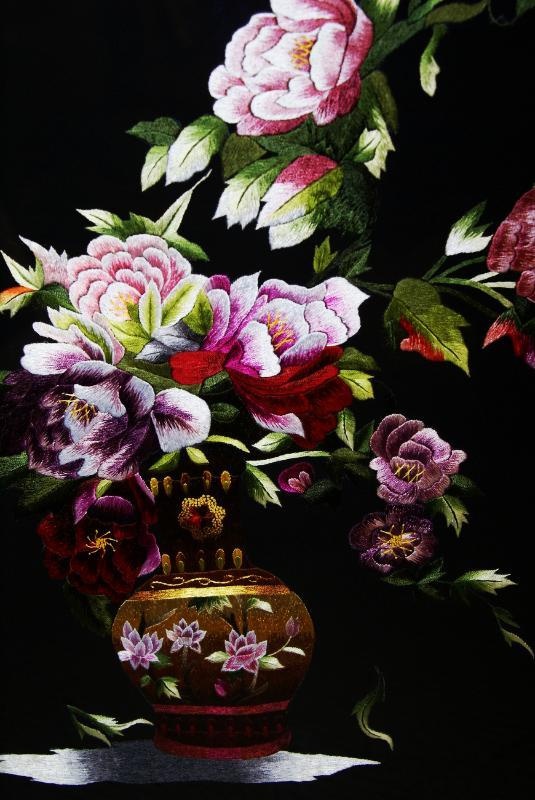
God’s Masterpiece

For we are His workmanship, created in Christ Jesus for good works, which God prepared beforehand, that we should walk in them.”  – Ephesians 2:10

550669ad08c41c01b2cddae18410dc78

While our efforts can’t earn salvation, our gratitude for Christ’s free gift should result in acts of service. We are not saved just for our own benefit, but to serve Christ and build up His church.

You are special! In Christ, you are God’s work of art, His poem. And God had you in mind for a specific job(s) when He created you.

God has blessed you with abilities and, (if you are His child), spiritual gifts. No one will ever possess your unique set of talents, ideas, abilities, feelings, and exact physical traits.

God’s plans for you are as unique and special as you are. God knows you inside and out (Psalm 139). He will not only use your strengths, but also use your surrendered weaknesses for His glory (2 Corinthians 12:10).

From Jacob’s 12 sons to the 12 disciples, it’s clear: God specializes in using ordinary people in extraordinary ways. And in God’s economy, the seemingly insignificant tasks―when done with the right attitude―honor Him (1 Corinthians 12:22-25).

The Christian life is full of paradoxes. In a society where self is glorified and competition reigns, the idea of serving God and others fly contrary to our selfish desires and comfort zones. But when we place Christ first and follow His lead, we position ourselves to experience His abundant life; the greatest fulfillment. If that isn’t enough, God also uses our obedient faith steps and rewards our efforts, even though He knows we’ll mess up at times (1 Corinthians 15:58).

Reading the Bible, prayer, trust in Christ, and listening to godly counsel are the keys to knowing God’s directives.

What are some of the good works God has prepared for you?

Who Am I?

What was I writing? … oh yeah, forgetfulness.

The other night I raked through my bathroom drawer looking for my headband, (to keep my hair back when washing my face.) Where in the world is it? Then I glanced in the mirror. Oh brother, when did I slip that on? I really don’t have memory loss―or do I? I admit, however, to occasional absentmindedness.

Ah, forgetfulness…

Remember the movie, Home Alone?

c56a17f1fd3a81af4cfb8077a6d1ea6dThankfully, I haven’t forgotten my kids on a family vacation. However, I can relate to frenzied Mom moments. Busyness, multitasking, and/or juggling hats only intensifies the craziness. That’s when I ask … who am I?

I know better than to let my feelings dictate my identity. For they come and go like the winter fog. I don’t want to settle for people’s opinions that change like the wind. And I refuse to listen to Satan’s accusations.

So, who am I in Christ?

In Christ …

I am chosen (Romans 8:30; Ephesians 1:4-6; 1 Peter 2:9):

  • Hand-picked by God
  • Adopted as His child
  • Called and purposed for salvation, even though I don’t deserve it

I am called to a holy life (2 Timothy 1:9):

  • Because of God’s purpose and grace before the world began

God’s call on the believer’s life results in abundant blessing. I’m all for God’s blessings, aren’t you? Here are some more benefits for the believer in Christ:

  • I am blessed with every spiritual blessing (Eph. 1:3).
  • I am holy, blameless, and covered in God’s love (Eph. 1:4).
  • I am forgiven (Eph. 1:7).560ebc9fada38635237e35db3f9b9761
  • I am marked as belonging to God by the Holy Spirit (Eph. 1:13).
  • I have been raised up to sit with Christ in glory (Eph. 2:6).
  • I am God’s work of art (Eph. 2:10) … wow!

Paul prayed that God would enlighten the eyes of (our) hearts so (we) may know the hope to which He has called (us), the riches of His glorious inheritance in His holy people.”     -Ephesians 1:18

If you―like me―forget who you are, look in the mirror and remember WHOSE YOU ARE. Here’s another great song by Casting Crowns, Who Am I? You can view it at this link:

http://www.youtube.com/watch?v=e7gfTYyLEHg.

Remember–you are blessed,

K. D.

Sank-a-what?

Sanc·ti·fi·ca·tion: noun, sounds like “saŋ(k)-tə-fə-ˈkā-shən” … not to be confused with “sank·a·va·ca·tion,” which sounds more like my daughter’s interpretation.

(This post article is also posted in the Gospel Blog by FEBC at http://bit.ly/13vG5Iy.)

I don’t pretend to be a theologian or philosopher. But I am a curious learner who wants―needs―to know how God’s truths work in daily, practical matters. So to make this concept clearer, I consulted Strong’s Greek Dictionary of the New Testament.

The translated Greek word Hagiasmos is associated with purity and holiness. It signifies (1) separation to God (1 Corinthians 1:30; 2 Thessalonians 2:13; 1 Peter 1:2), and (2) the resultant state, the conduct befitting those so separated (1 Thessalonians 4:3-4, 7), (3) it is translated “holiness” in Romans 6:19, 22; 1 Thessalonians 4:7; 1 Timothy 2:15; Hebrews 12:14, (4) Sanctification is thus the state predetermined by God for believers, into which in grace He calls them, and in which they begin their Christian course and so pursue it. (5) Hence they are called “saints.”

“Saints”―really? Now that’s a difficult concept for me to wrap my head around. I’m very aware of the times I mess up and sin. How can a holy God view someone like me as a saint?

God reminds me: I can’t live the Christian life by my own efforts. Sanctification/holiness results solely from His Holy Spirit working in my life. I do have a choice, however, whether I grow or regress in my Christian journey.

For my next five posts, under the category Sanctification, I plan to dig deeper into the five areas listed above. Will you join me? I hope we can learn together.

What are your views and/or experiences on sanctification?

Bad News, Good News

Care to join me for a steaming latte? It’s 12 degrees fahrenheit in my neck of the woods. Brrr. Reason enough to enjoy the crackling fire with a hot drink within reach.

As I mentioned in my earlier post, God’s first call in our lives deals with salvation. In fact, most of the Bible centers around John 3:16 (NIV), “For God so loved the world that He gave His one and only Son, that whoever believes in Him shall not perish but have eternal life.”

The word salvation appears 164 times in the Bible. According to Strong’s Concordance, salvation is “mattâth” in Hebrew and Aramaic, which means “a present: ― gift; reward.” The Greek translation “soteria” means “rescue or safety.”

Salvation can be summarized as follows: deliverance from the power or penalty of sin.

Whose sin? Both yours and mine. We’ve all done wrong things and failed to obey God’s laws (Romans 3:23; 5:12).

The result? Separation from holy God, our Creator. This separation―the penalty of our sin―is eternal death (Romans 6:23; Revelation 20:10-15). Our best efforts–moralism–fall short in our attempts to unite with God (Isaiah 64:6). That’s the bad news.

The good news: Jesus–God’s unique Son–never sinned (Hebrews 5:9). He alone bridged the gap between sinless God and sinful mankind when He freely died on the cross (1 Timothy 2:5-6; 1 John 5:9-12). He took our place in order to save us from sin’s consequences―including God’s judgment and death (2 Corinthians 5:21; 1 Peter 2:24; Romans 5:8-11).

The result? We can have new life because Jesus took our past, present, and future sins upon Himself, forgiving all our wrongdoing (Hebrews 10:5-18). Thus, He reconciles us to God (1 Peter 3:18; Hebrews 10:19-22). Jesus’ resurrection from the dead is the proof that His substitutionary sacrifice on the cross was acceptable to God. His resurrection has become the source of new life for whoever believes Jesus is the Son of God (John 11:25; Romans 10:9). He grants eternal life, giving union with God to those who believe and receive Him (Ephesians 2:4-7; John 1:12).

Do you believe Jesus is God’s Son? If so, have you confessed your sins to Him and asked Him for the gift of eternal life and forgiveness?

*This article is also posted in the Gospel Blog by FEBC at http://bit.ly/17RG5UK.