I, Jody, take you, John, to be my wedded husband. To have and to hold, from this day forward, for better, for worse . . . ‘Till death do us part.”
(stylegrace.com)
Sealed with a kiss, this vow—in the covenant of marriage—is valid as long as the husband is alive.
Paul’s readers understood that a violation of this law would disgrace Jody as an adulteress. If her husband dies, however, she is free to marry another man.
This is the picture Paul gives us to compare Christians and the Law. Not only do believers die to sin, but also to the Law, thus cancelling the Law’s “lordship” or claim over the believer (vs. 4).
Similar to the picture of baptism, death to sin begins when the believer places his/her trust in Christ. By identifying with the crucified Christ and joining in union to Him, the resurrected Christ becomes the believer’s new “husband”. The Holy Spirit enables the believer to produce good fruit for God.
So What?
Because of Christ’s sacrifice, the way to God is open through faith. No longer trying to earn salvation through an external code of law keeping or following Christian customs, the believer is free to serve God with a new heart out of love and gratitude.
“You may go free, not guilty!” What would these words mean to you if you were on death row?
The reality is, we are all on death row because we have broken God’s holy Law multiple times. But thankfully, God has made a way to clear our record, declare us not guilty, through faith in His Son, Jesus Christ.
Therefore, there is now no condemnation for those who are in Christ Jesus, because through Christ Jesus the law of the Spirit of life set me free from the law of sin and death.” – Romans 8:12
This verse, along with the rest of this chapter, is one of my favorite passages. In a world of condemning voices and pointing fingers, this verse gives reason to celebrate. Jesus liberates the believer from the old bondage to sin and death!
Two laws are cited in this passage:
The Law of Sin and Death. It lurks around every corner, challenging every good motive, enslaving the one who strives to fulfill the Law through self-determination. Romans 7:14-25 describes its havoc.
The Law of the Spirit. Through Jesus Christ, this law defeats the old law’s grip on sin and death, setting people free. Shepherd’s Notes observes: “Twenty-one times in Romans 8 the Greek word for Spirit or spirit occurs. At least 18 of these are references to the Holy Spirit . . . . We have in Romans 8 Paul’s fullest discussion of the new life of the Spirit.” (For more information on our sinful nature vs. our new life in Christ, see 6:6-8; Ephesians 4:22-24; Colossians 3:3-15.)
Verse 3 not only explains how the Law of the Spirit sets people free, but also contains the following two doctrines:
The Incarnation
God’s Son, Jesus Christ, became one of us. Paul describes Christ’s coming as “in the likeness of sinful man.”
The Atonement
God achieved our freedom from captivity to sin through Jesus’ sacrificial death (“sin offering”) on the cross. Jesus bore the brunt of the world’s sins. The NIV Study Bible notes: “In Old Testament times, animal sacrifices were continually offered at the temple. The sacrifices showed the Israelites the seriousness of sin: blood had to be shed before sins could be pardoned (see Leviticus 17:11). But animal blood could not really remove sins (Hebrews 10:4). The sacrifices could only point to Jesus’ sacrifice, which paid the penalty for all sins.”
In verse 9, Paul tells his readers that they are not controlled by their sinful nature, but their lives are guided by the indwelling Spirit (Holy Spirit). The Holy Spirit is also God’s guarantee of eternal life for the believer.
So What?
Christians can rise above sin and experience life through the empowerment of the indwelling Holy Spirit.
A Christian is anyone who has the Spirit of God (Holy Spirit) living in him/her. Jesus promised His Spirit to anyone who sincerely trusts Him for salvation and acknowledges Him as Lord.
Although our feelings come and go, we can stand confidently on God’s promises of living forever with Him. (See also Romans 8:23; 1 Corinthians 6:14; 2 Corinthians 4:14; 1 Thessalonians 4:14.)
What then shall we say? That the Gentiles, who did not pursue righteousness, have obtained it, a righteousness that is by faith; but Israel, who pursued a law of righteousness, has not attained it. Why not? Because they pursued it not by faith but as if it were by works. They stumbled over the “stumbling stone.” – Romans 9:30-32, NIV
The “stumbling stone” was none other than Jesus. Because Jesus did not meet many of the Jews’ expectations for their Messiah, they rejected Him as God’s Son. Although the Jews pursued a worthy goal of honoring God, some became short-sighted and dedicated themselves more to the Law than to God. They either didn’t see—or want to believe—their Old Testament Scriptures that salvation (righteousness) comes by faith, not by human effort (Gen. 15:6).
Paul had reminded his readers earlier in chapter 9 that: 1) The Jews couldn’t earn God’s favor through their national heritage, 2) God’s ways are not bound by human ideas and plans, and 3) The Jews were responsible for rejecting Jesus as Messiah.
As it is written: “See, I lay in Zion a stone that causes people to stumble and a rock that makes them fall, and the one who believes in Him will never be put to shame.” – Romans 9:33
On the other hand, Paul explains that some Gentiles acquired God’s righteousness, but not on the basis of perfectly following the Law. Rather, their righteousness was given from God as a gift because they accepted Christ and His message.
So What?
Like the Jews in Paul’s day, it’s human nature to try and get right with God by being good. This can take many forms: faithful church attendance, church work, giving, being nice, volunteering, good sportsmanship. Although these are worthy pursuits, according to Scripture they won’t make us right with God.
Some people stumble over Christ because salvation by faith goes against all they’ve experienced and been taught. Some think because God is love He will overlook their sins. Some stumble over Christ because He asks for humility and requires obedience.
But Scripture makes it clear: There is only one way to obtain righteousness and become right with God. It boils down to accepting or rejecting God’s Son, Jesus Christ.
Whoever believes in the Son has eternal life, but whoever rejects the Son will not see life, for God’s wrath remains on him.” -John 3:36
If you haven’t placed your trust in Jesus, and the work He did for you on the cross to forgive your sins, why not do it now? None of us are guaranteed tomorrow. And eternal life is at stake. Simply admit to Him your sins and ask His forgiveness. Tell Him you believe He is all He claims in the Bible. Ask Him to come into your life and indwell you through His Holy Spirit. Then follow Him by obeying His commands.
Did God reject His people? By no means!” – Romans 11:1
This chapter begins in classic Paul style of question-declaration. What follows is a discussion of the remnant of Israel, the salvation of Gentiles, Israel’s jealousy of the fruitful Gentile mission, and the prophetic declaration of Israel turning toward Christ.
“The Remnant”, according to Shepherd’s Notes, “consists of the righteous people of God who remained after divine judgment . . . . For example, Noah and his family may be understood as survivors, or a remnant, of a divine judgment in the flood (Gen. 6:5-8; 7:1-23). In Romans 9:25-33, Paul quoted from the prophets Hosea and Isaiah to demonstrate that the saving of a remnant from among the Jewish people was still part of the Lord’s method of redeeming His people. There would always be a future for anyone among the covenant people who would turn to the Lord for salvation.”
God did not reject Israel as an entire nation. There remained a remnant of Jewish believers. Paul points to himself being a Jew, (so were Jesus’ disciples and most of the early Christian missionaries). Paul backs up his claim—God didn’t reject His special people—by using the great reforming prophet, Elijah, as an example. During a corrupt time when Israel’s priesthood and king’s court strayed from God, Elijah thought he alone remained faithful. But God replied, “I reserve seven thousand in Israel—all who have not bowed down to Baal,” (1 Kings 19:18).
Paul then connects the dots: “so too, at the present time there is a remnant chosen by grace. And if by grace, then it is no longer by works; if it were, grace would no longer be grace,” (vs. 5-6).
So What?
We are not saved because of our religion, good works, or heritage. We are saved only through faith in Jesus Christ.
On whom, or on what, or you depending for salvation?
Paul’s response to God’s grace. Only God could turn disobedience into an opportunity for His mercy toward those who would believe.
I do not want you to be ignorant of this mystery, brothers, so that you may not be conceited: Israel has experienced a hardening in part until the full number of the Gentiles has come in.” -Romans 11:25
Paul then boldly declares: “. . . . all Israel will be saved,” (vs. 26). This surprising statement should be studied within the big picture of Paul’s previous statements about the nation Israel.
What is the basis of Paul’s claim?
Shepherd’s Notes suggests the following:
Although interpreters differ widely in their understanding of this difficult passage, the most probable interpretation of the phrase “all Israel” is that it indicates a great turning of Israel to Christ, without specifying the conversion of every individual Jew, just as the “full number of Gentiles” does not mean that every Gentile will be saved.
Israel’s salvation will be like all other people—responding in faith to the forgiveness made possible by Jesus Christ through His death and resurrection.
Paul describes this as a “mystery”, which had been previously kept secret, but now revealed. This mystery contained the revelation of God’s will made known to all (1 Cor. 2:1,7; 4:1), which included Gentiles (Rom. 16:25-26; Col. 1:26-27; Eph. 3:3-6).
The mystery of the New Testament is described as an open secret: “Christ in you, the hope of glory”.
So What?
God—who is always at work in people’s lives—is gracious. He is extremely patient and longs for all to turn to Him for forgiveness and eternal life (2 Peter 3:9). He desires that everyone share in the blessings of the gospel (Eph. 2:11-13), made possible through Jesus’ work (Col. 2:2, Eph. 1:9), and His indwelling Holy Spirit (Col. 1:26-27).

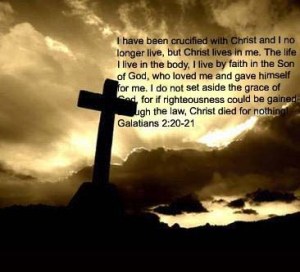 is open through faith. No longer trying to earn salvation through an external code of law keeping or following Christian customs, the believer is free to serve God with a new heart out of love and gratitude.
 “so too, at the present time there is a remnant chosen by grace. And if by grace, then it is no longer by works; if it were, grace would no longer be grace,” (vs. 5-6).
 kdmanestreet